 By ali4050284
A family holiday in the seventies rarely started at the destination — it started the moment the car pulled out of the driveway. There was no GPS, no phone to find the nearest motel, and no screen to keep the children quiet. Instead there were paper maps, roadside signs, crackly radio stations, and a giant station wagon packed to the roof. These fifteen hallmarks made the journey itself the adventure.
1. A Station Wagon Packed to the Roof
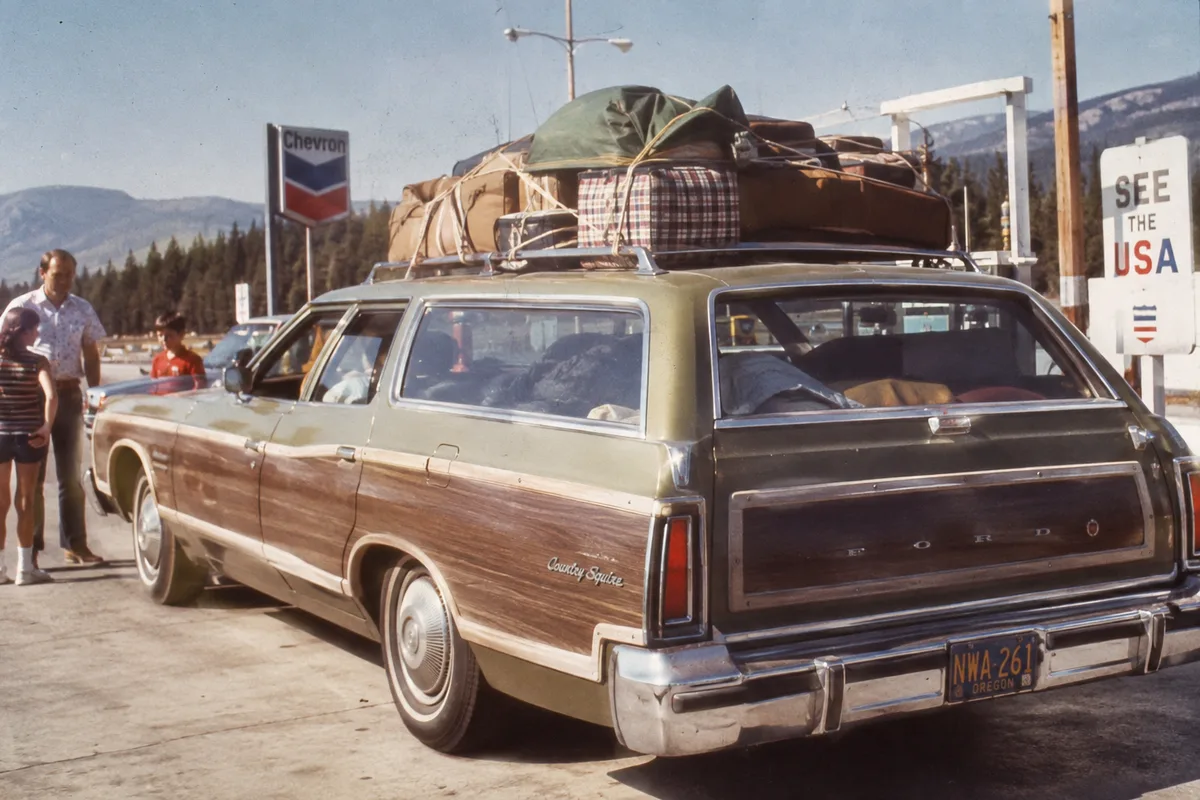
Few things say seventies family holiday quite like a huge station wagon loaded with suitcases, coolers, blankets, and children’s gear. The wood-panelled models were especially memorable, and some even had rear-facing seats in the very back where children could watch the road disappear behind them. With luggage strapped to the roof and every seat filled, the car itself became as memorable as the holiday.
2. Folding Paper Maps Everywhere
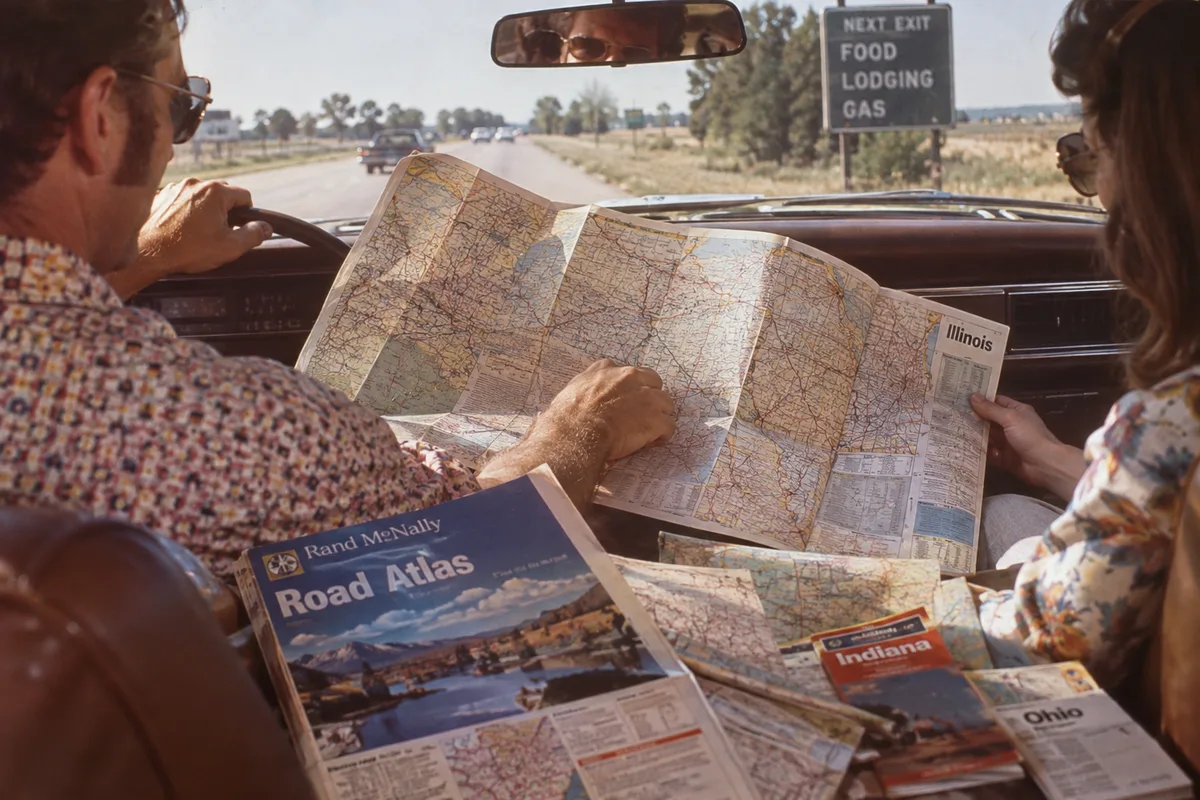
Before a phone could calmly tell you to turn around, somebody had to work out where you were using a paper map. Families carried road atlases and maps picked up from petrol stations and motoring clubs, and the glove box slowly filled up with them. One wrong exit could leave the passenger wrestling with an enormous folded map while the driver looked for somewhere safe to pull over.
3. Children Fighting Over the Back Seat
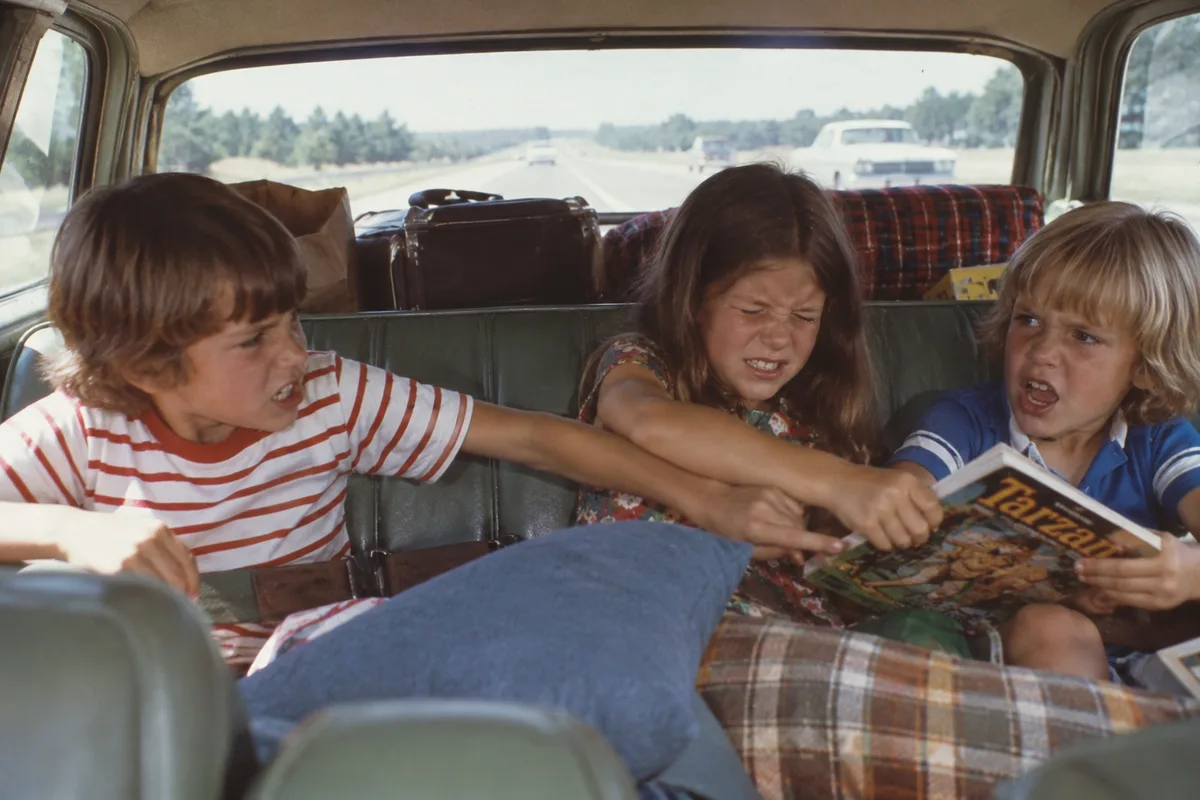
There were no tablets fixed to the headrests to keep the peace. Children sharing a bench seat had comic books, toys, snacks, and the view from the window — and after enough hours on the road, invisible dividing lines appeared between brothers and sisters. Arguments about who was touching whom, and the endless question of how much longer, were simply part of the journey.
4. AM and FM Radio as the Soundtrack
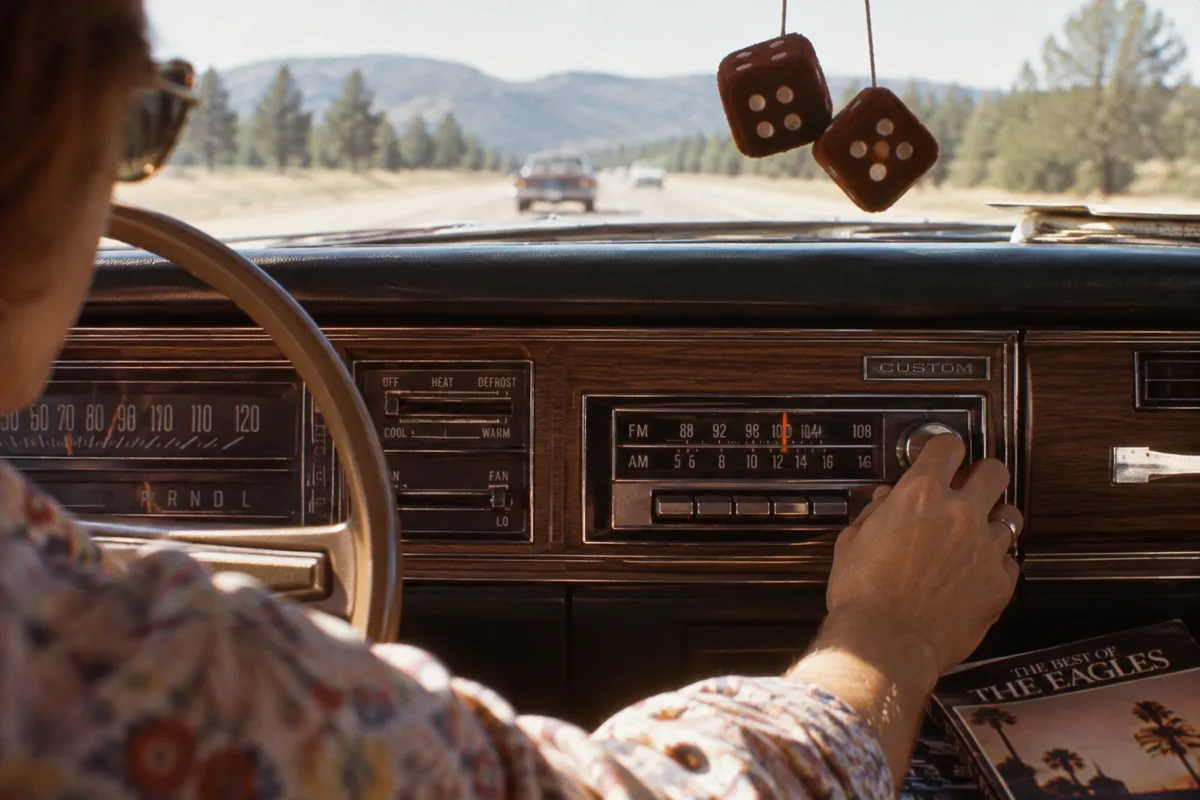
The music on a road trip depended on where the car happened to be. Families tuned into local AM and FM stations for songs, news, and baseball, only to hear a favourite station fade into static as they drove beyond its reach. Then came the hunt for another station worth listening to — at least until that one faded away too.
5. The 8-Track Player in the Car
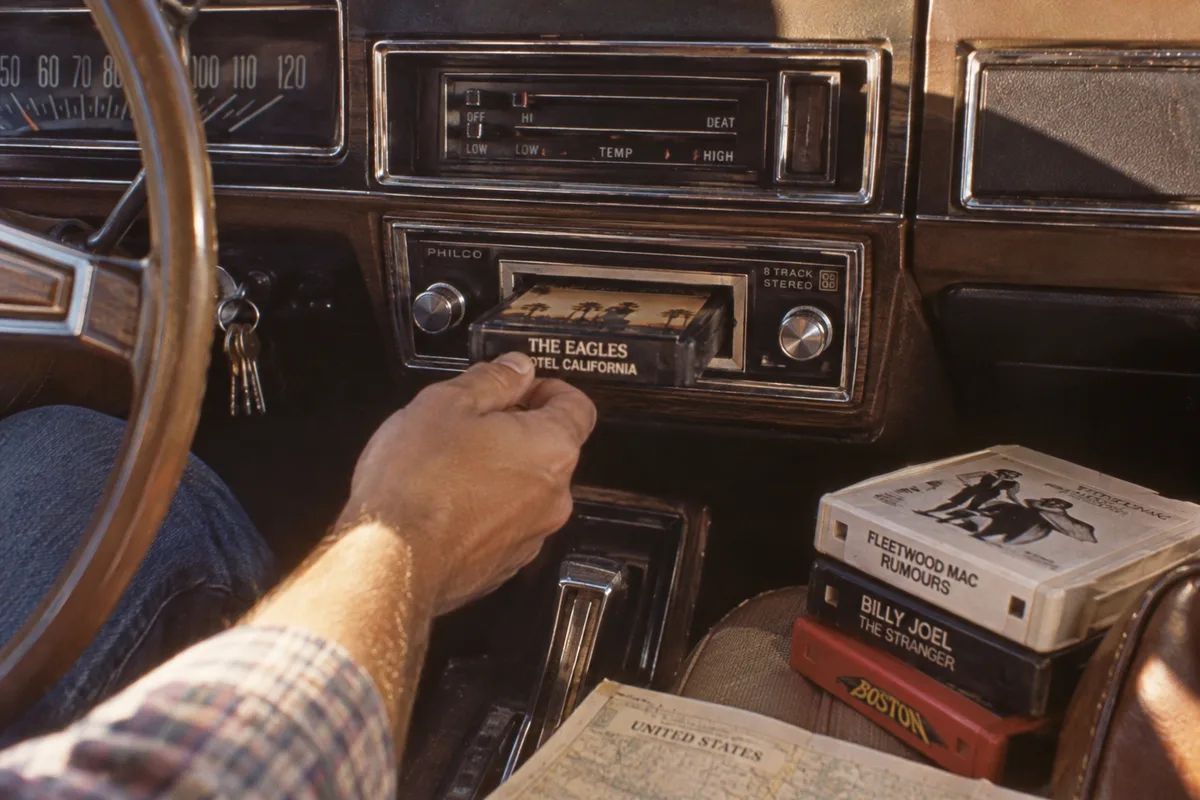
Drivers who did not want to leave the music to local radio could turn to the 8-track player, one of the decade’s classic car accessories. A small collection of favourite tapes meant the family could hear the same albums again and again as the miles passed. The format had its quirks, including songs being interrupted by a track change at the worst possible moment.
6. A Cooler Full of Drinks and Sandwiches
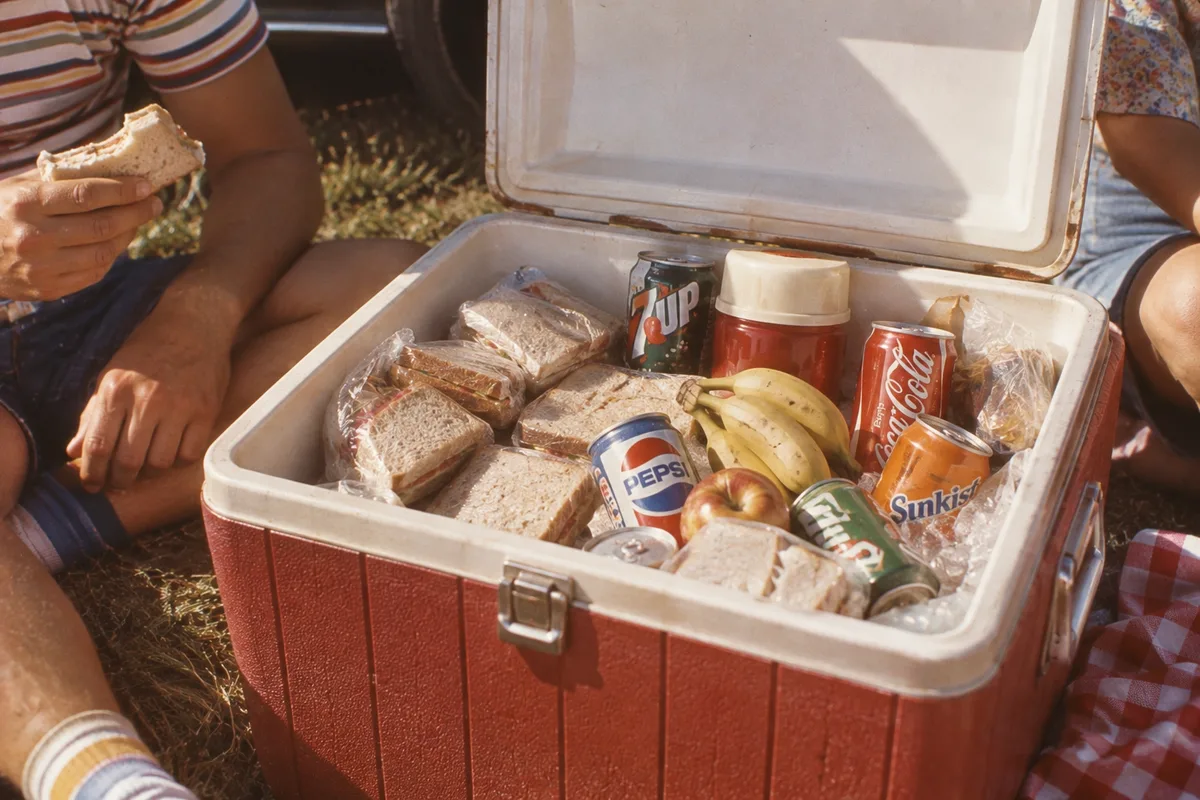
Eating every meal in a restaurant would have eaten through a family’s holiday budget, so plenty of travellers brought food from home. A hard-sided cooler in the back of the wagon might hold sandwiches, fizzy drinks, fruit, and boiled eggs. It was not glamorous, but a homemade lunch at a rest stop cost far less than feeding a whole family in a diner.
7. Petrol Station Stops That Solved Everything
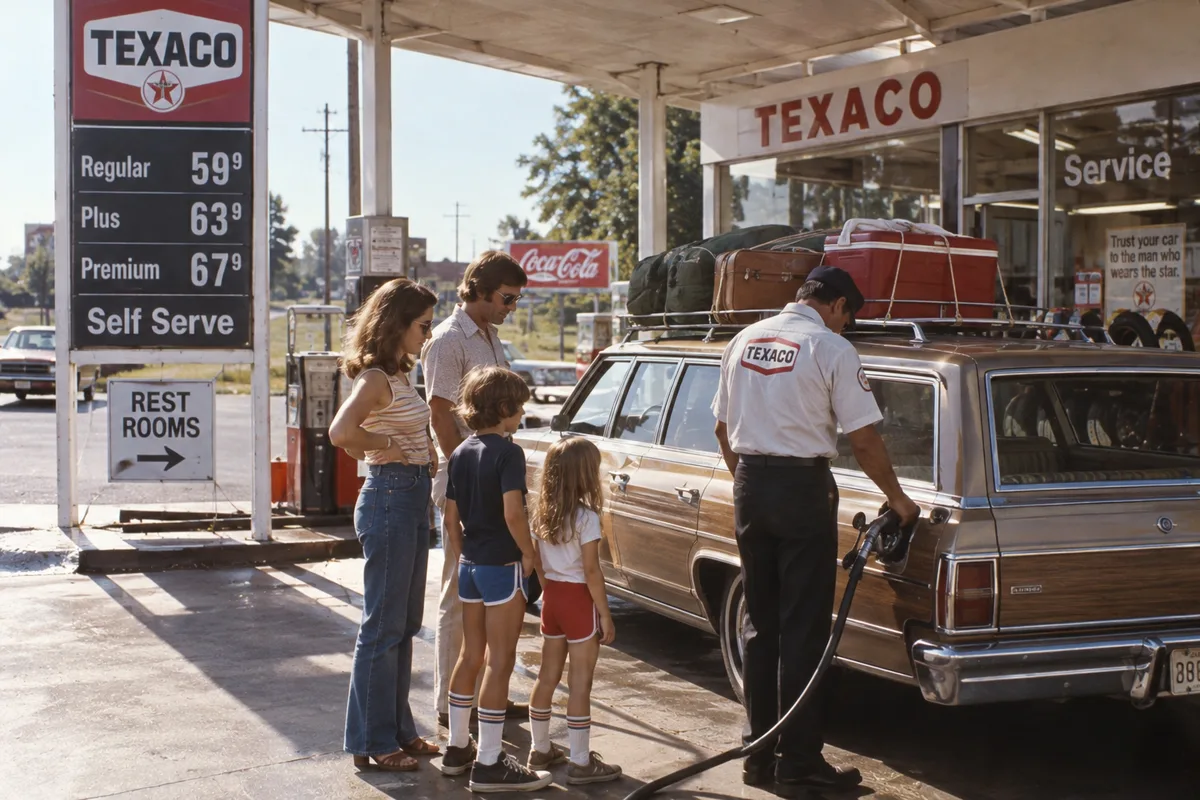
A petrol station could fix several road-trip problems at once. As well as filling the tank, families could use the toilet, buy snacks, pick up a map, and ask for directions. Full-service stations were still common, so an attendant might check the oil, look at the tyres, or offer advice about the road ahead while everyone stretched their legs.
8. Lunch at a Roadside Picnic Table
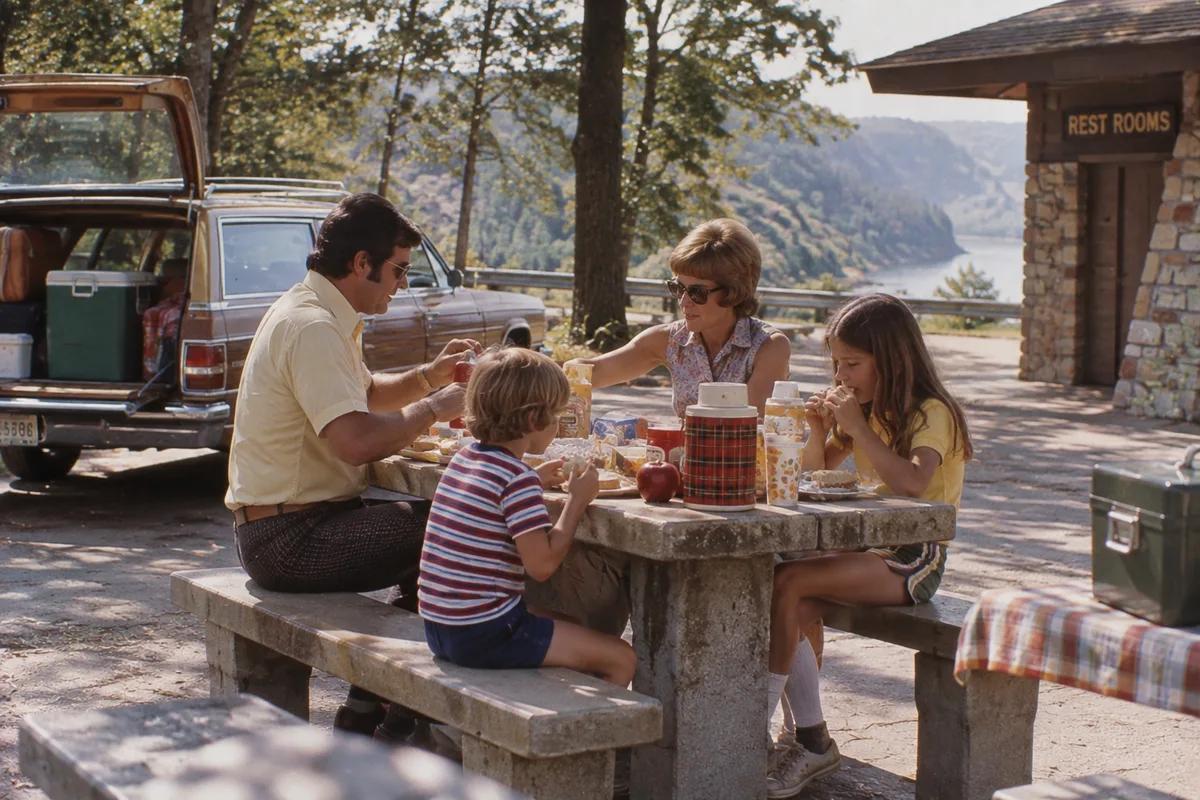
Sometimes the best lunch spot was simply the next rest area with an empty picnic table. Families unpacked coolers and flasks, laid out sandwiches and paper plates, and enjoyed a little time outside the car before returning to the highway. A station wagon parked nearby and a checked blanket or two could make the whole scene look like a holiday photograph from the decade.
9. Watching for the Motel VACANCY Sign
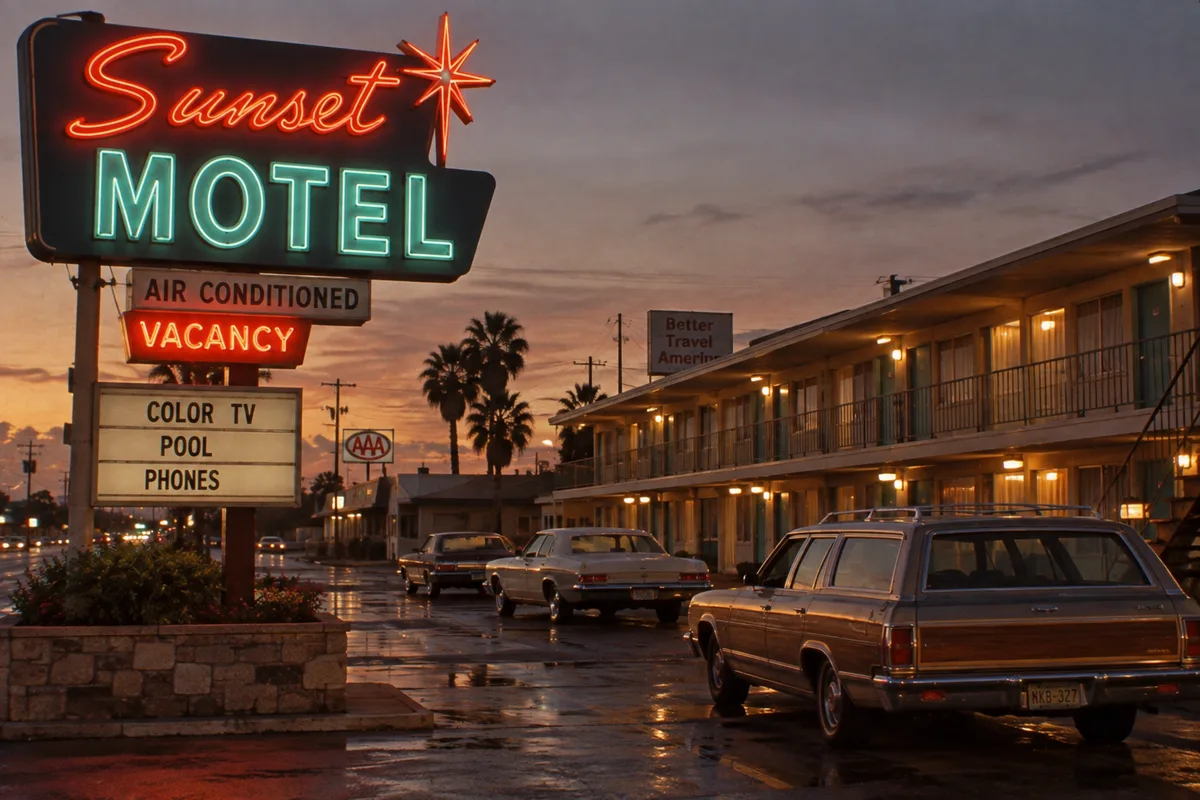
Not every night of a road trip was booked weeks ahead. Families often just kept driving until they were ready to stop, then started watching the roadside for motels — and, more importantly, for a glowing VACANCY sign. Outside corridors, neon signs, parking right by the room, and clearly advertised prices were all familiar features of the roadside motels lining the main routes.
10. The Motel Swimming Pool
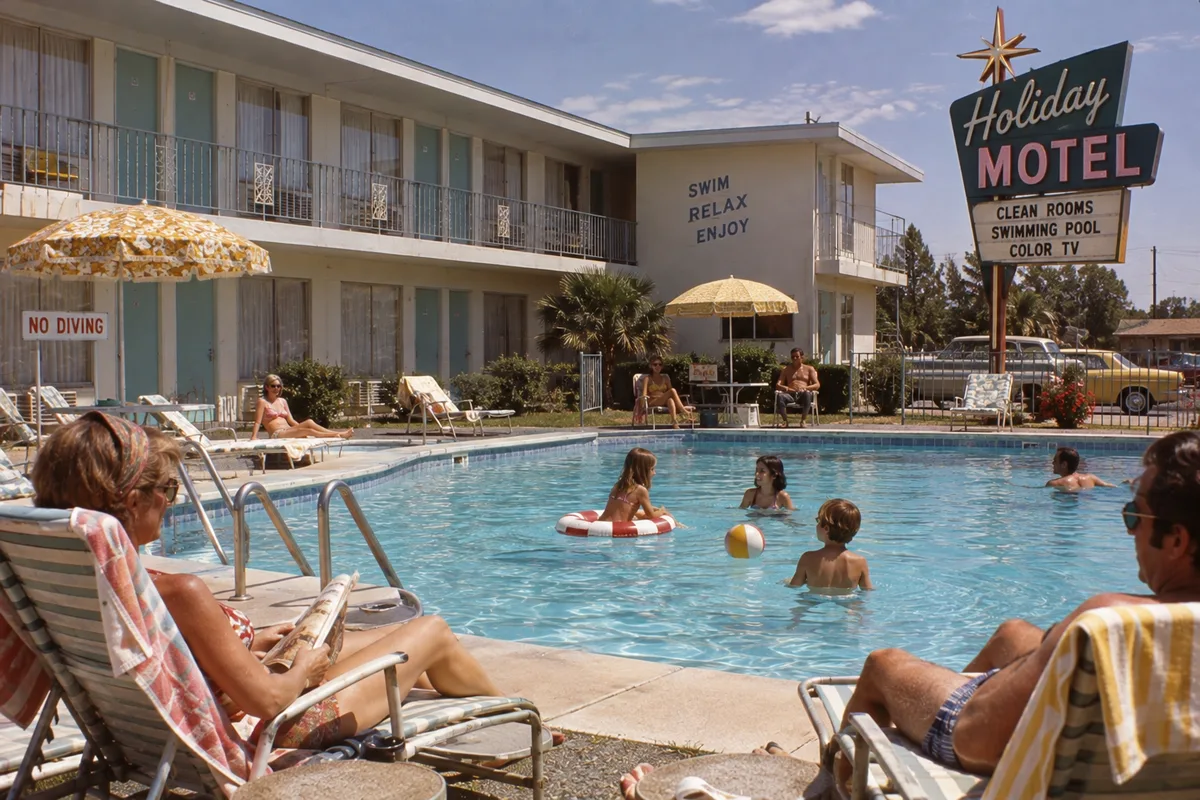
A roadside motel did not need room service or a grand lobby to impress the children — it just needed a swimming pool. After hours squeezed into a hot car, the chance to jump into the pool could easily become the best part of the day. When parents were choosing between two similar places to stay, the promise of a pool was a very persuasive detail.
11. Postcards From Every Stop
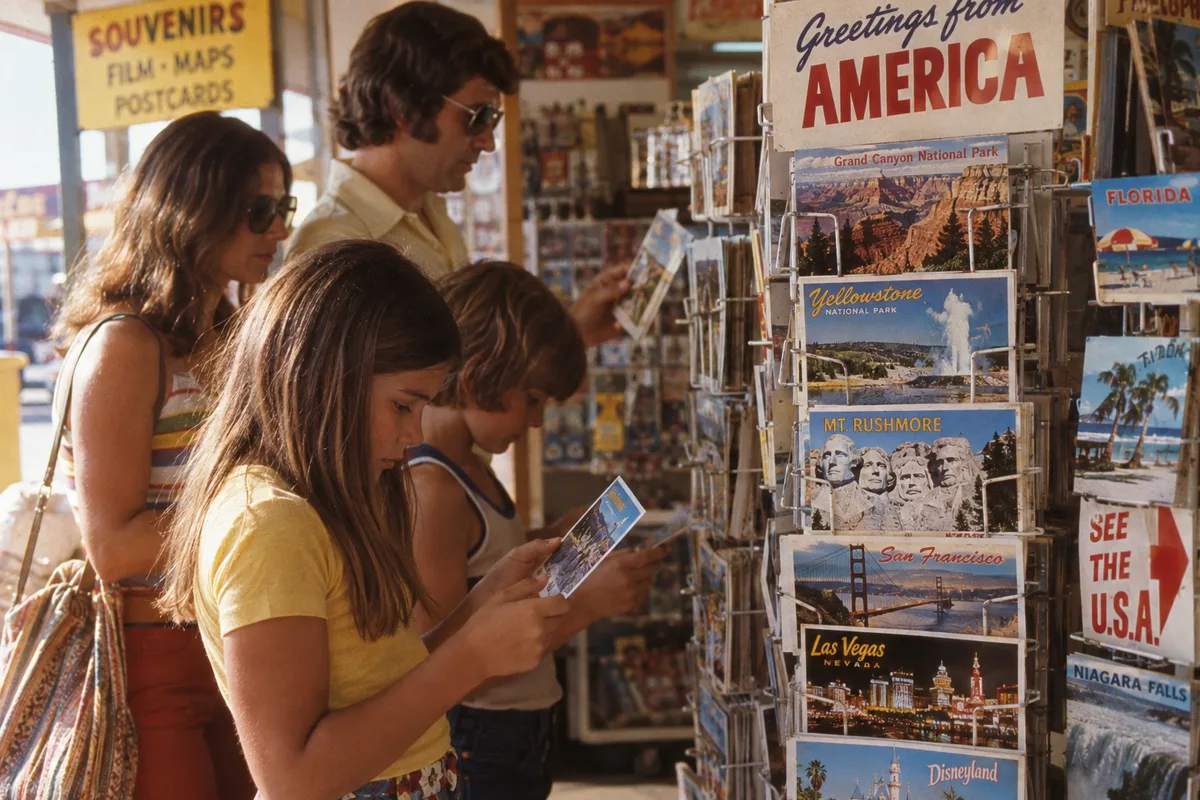
Long before holiday updates appeared instantly online, travellers sent postcards. Gift shops, motels, petrol stations, and attractions sold racks of colourful cards showing landscapes, state maps, and oversized “Greetings From” lettering. They were cheap souvenirs, and they gave children an easy way to tell grandparents and friends back home exactly where the family had ended up.
12. Roadside Attractions You Had to Stop For
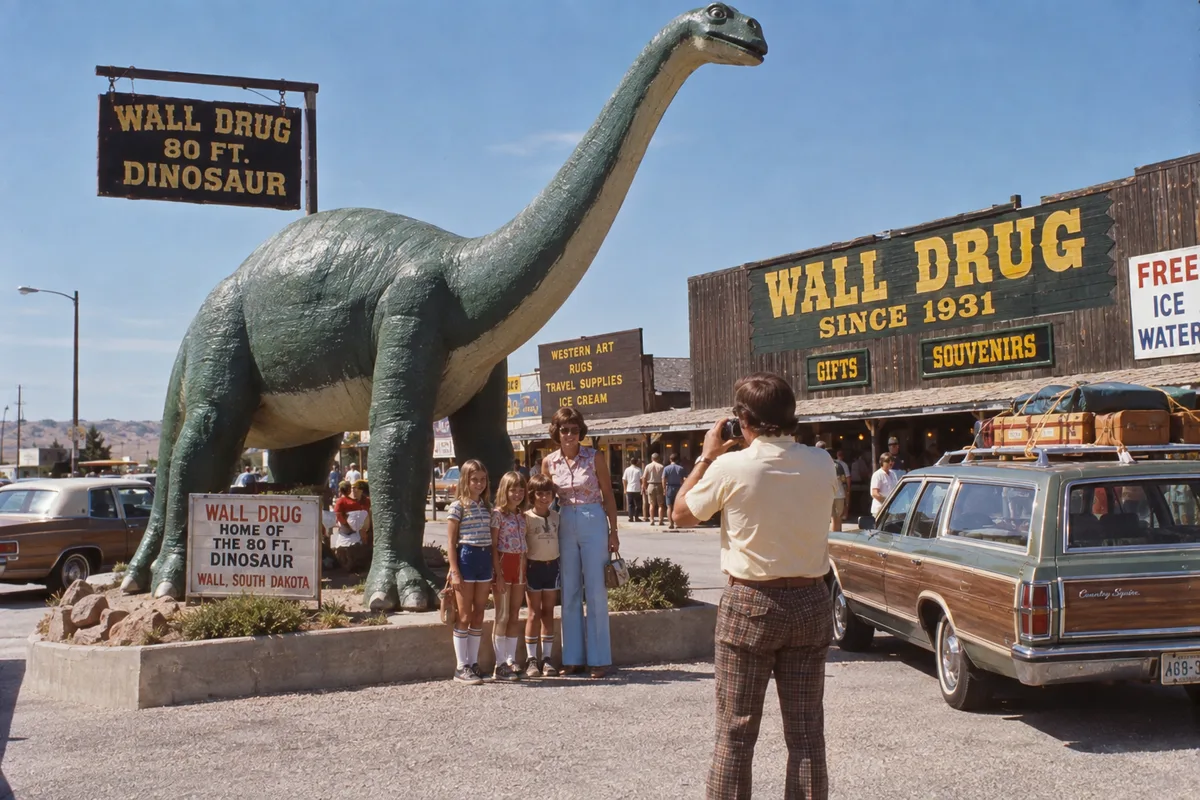
You might have been heading for a national park or a famous city, but that never stopped a family pulling over to see a giant statue, a cave, or a reptile farm. Billboards advertised these oddities for miles ahead, giving children plenty of time to beg their parents to take the exit. The stops broke up long stretches of driving and became stories in their own right.
13. Souvenir Pennants and Bumper Stickers
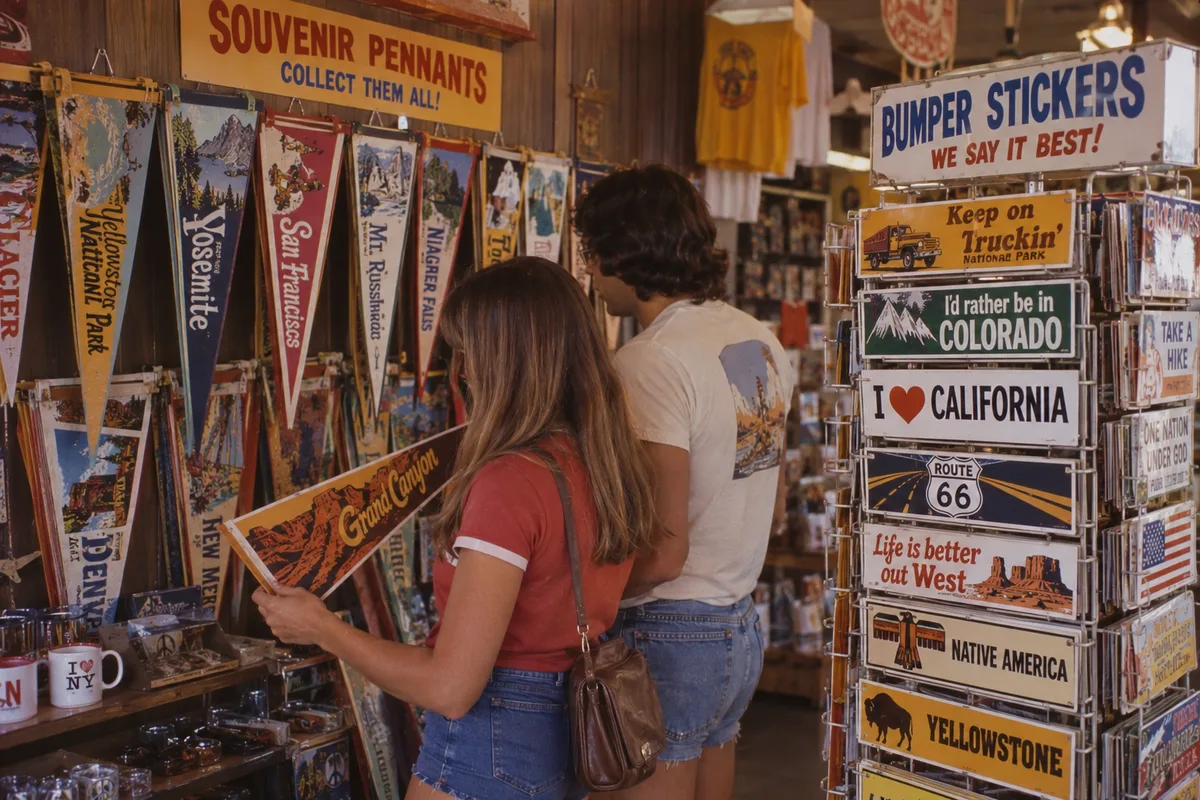
No holiday was complete without something inexpensive to prove you had been there. Felt pennants, stickers, patches, and miniature number plates were easy to pick up at national parks and tourist towns. Stick enough of them on the family wagon and, over time, the car itself became a rolling scrapbook of every trip the family had taken.
14. Playing the Number Plate Game

When staring out of the window was the main entertainment, passing cars became part of the fun. Children hunted for number plates from as many states as possible, searched road signs for letters of the alphabet, or counted cars of a particular colour. These games needed no equipment at all, and they could fill at least part of an otherwise endless afternoon on the highway.
15. Getting Lost and Asking for Directions
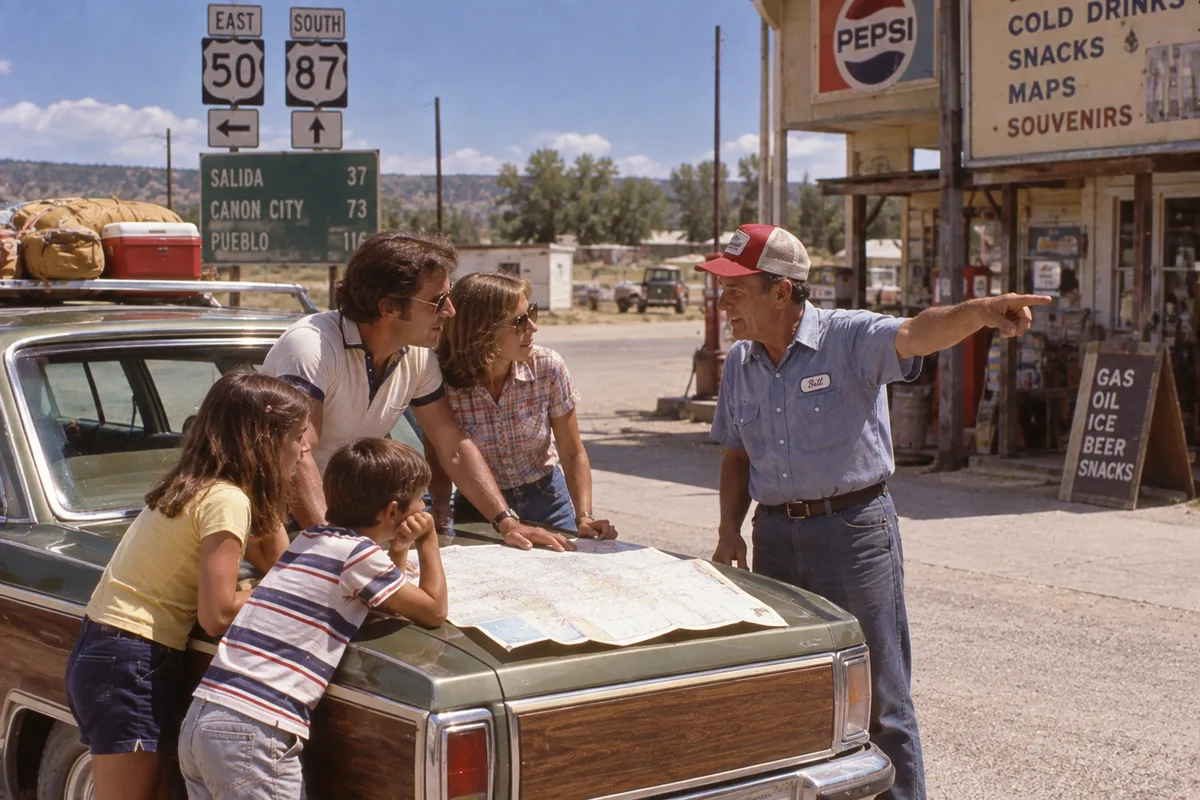
A wrong turn was never followed by an instant rerouting message. Drivers had to check the map, look for familiar signs, or admit defeat and ask somebody for help. Petrol attendants, diner staff, and motel clerks all became unofficial navigators, sometimes giving directions by landmarks rather than street names — turn after the church, keep going past the red barn, and you have gone too far if you reach the bridge.
A seventies road trip had plenty of inconveniences that modern travellers can avoid with a few taps on a phone. Families got lost, listened to radio static, hunted for motels at the end of a long day, and spent hours squeezed together in one enormous car. But those very troubles created the memories that lasted — the folded maps, the wagon, the 8-tracks, the motel pools, and the unexpected detours made getting there an experience of its own.