 By ali4050284
For forty years, nobody sat in Elias Turner’s chair.
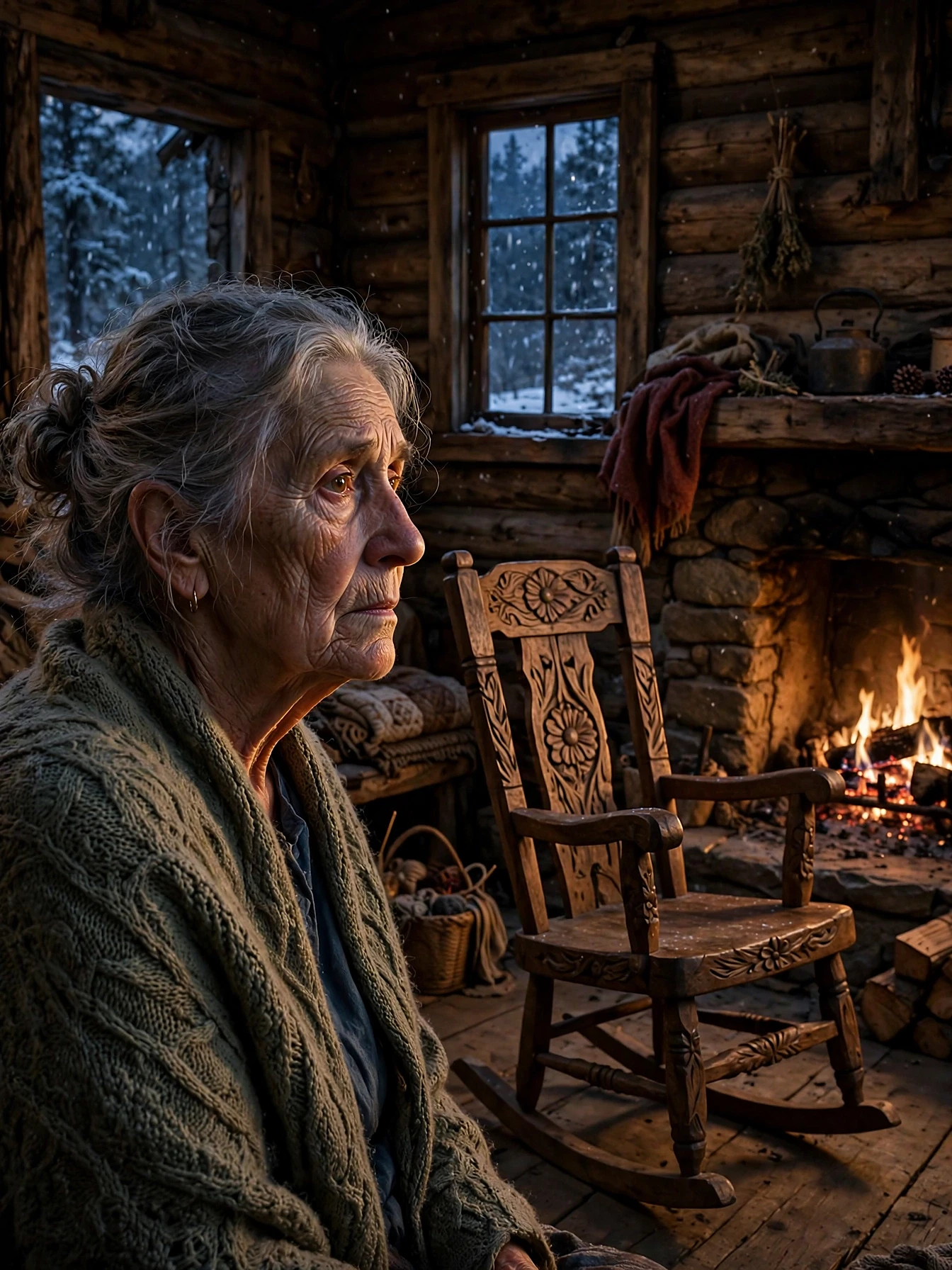
It stood by the fireplace in the little cabin at the top of the holler, a rocking chair Elias had carved himself from white oak the winter before he married Martha. He had sat in it every evening of his life, reading his Bible, mending harness, watching the fire die down to embers. When the logging accident took him at forty-one, Martha was twenty-nine with three small children and a mortgage she could not pay.
She paid it anyway. She took in washing, sold eggs, planted a garden so big the neighbours joked it fed half the mountain. And every evening, after the children were in bed, she sat across from that empty chair and told it about her day, the way she had told Elias.
“Don’t sit there,” she told the children, and later the grandchildren, whenever anyone reached for it. “That’s your granddaddy’s chair.”
The children obeyed. The grandchildren obeyed too, though they whispered about it. Some said Martha was mad with grief. Some said she was waiting for a ghost. Martha never explained. She only dusted the chair every Saturday, oiled its rockers every spring, and kept a folded quilt over its arm — the quilt Elias had liked best, the blue one.
On the fortieth winter after Elias died, the worst snowstorm in living memory came down on the mountain. It started on a Tuesday and by Thursday the road was gone entirely, buried under drifts taller than a man. The power went out. The phone line went dead. Martha, eighty-nine years old and alone in the cabin, banked the fire, wrapped herself in shawls, and waited it out the way she had waited out everything else in her life.
On Thursday night, long after dark, there was a knock at the door.
Martha froze. Nobody could be out in that storm. Nobody should be. She took the poker from the fireplace and went to the door, and when she opened it, a young man stood there, half-buried in snow, his lips blue, his coat frozen stiff around him.
“Please,” he said. “My truck went off the road down below. I walked up. I saw your light.”
Martha pulled him inside, sat him by the fire, wrapped him in blankets and made him soup, her hands steady the way they had been steady for forty years of hard winters. The young man — his name was Daniel — told her he was a surveyor, new to the county, and that he had been trying to reach the next town when the storm caught him.
“You saved my life,” he said, when the colour came back to his face.
“Nonsense,” Martha said. “Anybody would have opened the door.”
But as the night wore on, Daniel kept looking at the empty chair. Finally he asked, “Why doesn’t anyone sit there?”
Martha was quiet for a long time. The fire crackled. The wind howled against the shutters.
“Because the night Elias died,” she said slowly, “the men brought him home, and the preacher sat with me, and he said something I never forgot. He said, ‘Martha, grief is a chair you pull up to your own table. You can sit in it forever, or you can leave a place for the living to sit beside you.’ I didn’t understand him then. I thought he meant I should move on and marry again. I never did. But I kept the chair empty, because I thought that was loyalty.”
She looked at the chair, and then at the shivering young man by her fire.
“But tonight,” she said, “I think I finally understand what he meant. The chair wasn’t for Elias. It was for whoever needed it next. And tonight, that’s you.”
She stood up, took the blue quilt from the arm of the chair, and laid it across Daniel’s shoulders. “Sit,” she said. “Sit in my husband’s chair. Rest. You’re safe here.”
Daniel sat. The chair rocked gently, the way it had rocked for Elias all those years ago, and Martha sat across from it, in her own chair, and for the first time in forty years the fireplace had two people sitting by it again.
In the morning the storm broke, and the neighbours came up the mountain with shovels to check on Martha. They found her making breakfast for a young surveyor, and they found the blue quilt folded neatly on the young man’s shoulders, and they found Martha laughing — really laughing — for the first time any of them could remember.
She still keeps the chair by the fire. But now, when the grandchildren visit, she tells them something different.
“That chair,” she says, “is for whoever needs it. That’s what your granddaddy would have wanted. He never did like an empty chair.”