 By ali4050284
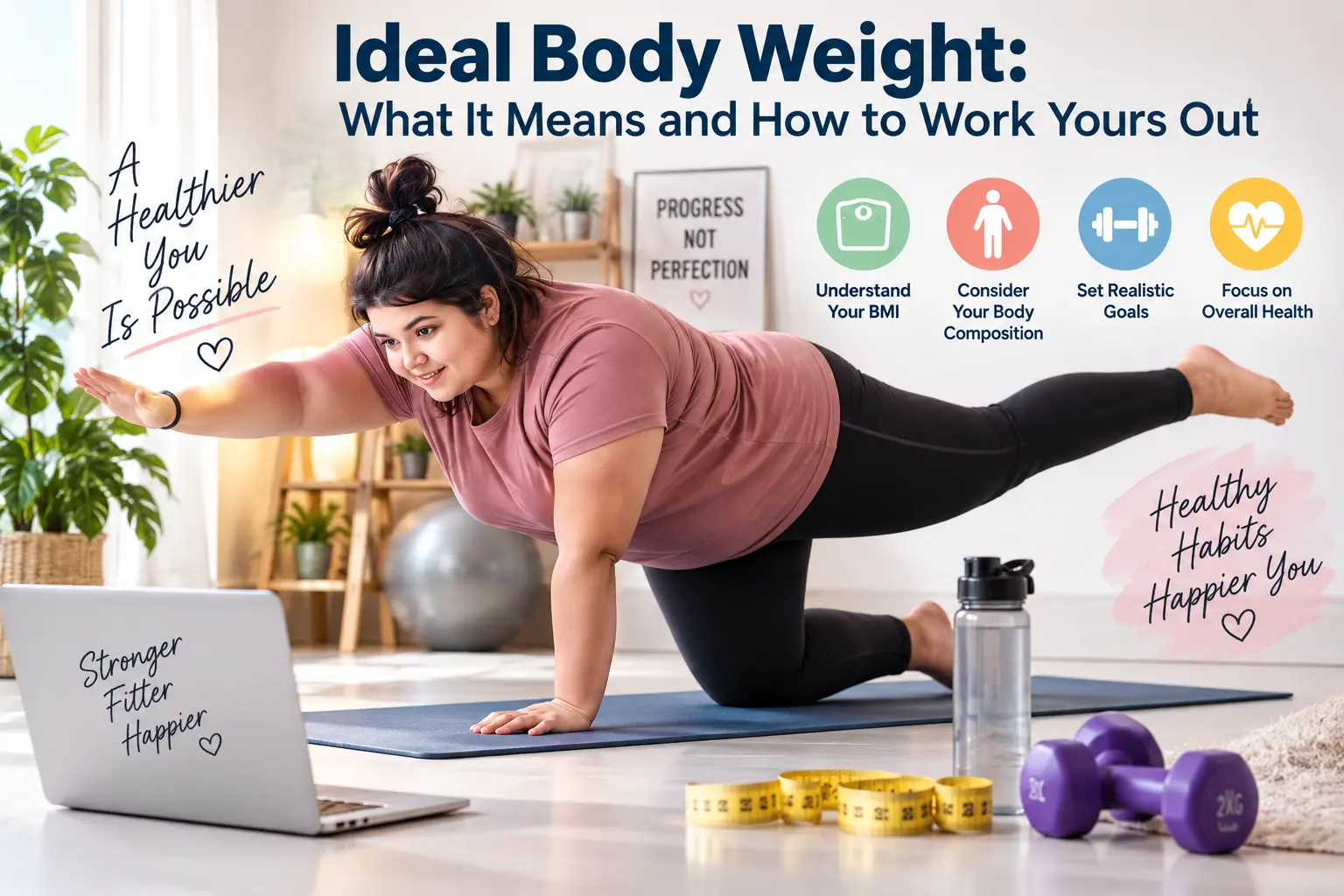
Your ideal body weight is an estimate of the weight considered healthiest for your height, based on established formulas used for decades in clinical and fitness settings. It’s not a single “perfect” number but a useful reference point. In this guide, you’ll learn how ideal weight is calculated, what the common formulas actually measure, how to interpret your result, and why it should always be considered alongside other health indicators rather than on its own.
Key Takeaways
- Ideal body weight is an estimate based on height (and sometimes frame size or sex), not a fixed target everyone should aim for.
- Several formulas exist — Devine, Robinson, Miller, and Hamwi — and they often give slightly different results.
- Ideal weight ranges are more useful than a single figure.
- Muscle mass, bone density, age, and body composition all affect what’s healthy for you individually.
- Ideal weight calculations were originally developed for medical dosing, not general fitness advice.
- Tools like a BMI calculator or an ideal weight calculator can give a helpful starting point, but shouldn’t replace professional advice.
What Does “Ideal Body Weight” Actually Mean?
Quick answer: Ideal body weight (IBW) is an estimated healthy weight for a given height, calculated using standardised formulas developed by researchers and clinicians. It gives a reference range rather than a precise target.
The concept originated in medicine, where doctors needed a consistent way to estimate weight for calculating medication doses, particularly for patients who couldn’t be weighed accurately. Over time, the same formulas became popular in fitness and general health contexts, even though that wasn’t their original purpose.
This is an important distinction. An ideal body weight figure tells you very little about your body fat percentage, muscle mass, or overall health. It’s simply a height-based estimate.
How Ideal Body Weight Is Calculated
There isn’t one universally agreed formula. Several have been developed over the years, each with a slightly different approach.
The Devine Formula
The most widely used formula in clinical settings is the Devine formula, created in 1974:
- Men: 50 kg + 2.3 kg for each inch over 5 feet
- Women: 45.5 kg + 2.3 kg for each inch over 5 feet
Worked example: A man who is 5 feet 10 inches tall (10 inches over 5 feet):
50 + (2.3 × 10) = 50 + 23 = 73 kg
The Robinson Formula (1983)
- Men: 52 kg + 1.9 kg per inch over 5 feet
- Women: 49 kg + 1.7 kg per inch over 5 feet
The Miller Formula (1983)
- Men: 56.2 kg + 1.41 kg per inch over 5 feet
- Women: 53.1 kg + 1.36 kg per inch over 5 feet
The Hamwi Formula (1964)
- Men: 48 kg + 2.7 kg per inch over 5 feet
- Women: 45.5 kg + 2.2 kg per inch over 5 feet
Each formula was developed using different population data, which is why they don’t always agree. For a height of 5’10”, the four formulas can produce results ranging from roughly 71 kg to 76 kg — a meaningful difference when treated as a strict target rather than a rough guide.
If you’d rather skip the manual maths, the ideal body weight calculator runs these formulas for you and shows a comparison instantly.
Ideal Weight by Height: Example Ranges
The table below gives approximate ideal weight ranges (using an average across common formulas) for different heights. These are estimates only.
| Height | Approximate Ideal Weight Range (Men) | Approximate Ideal Weight Range (Women) |
|---|---|---|
| 5’0″ (152 cm) | 50–54 kg | 45–49 kg |
| 5’4″ (163 cm) | 59–64 kg | 54–58 kg |
| 5’6″ (168 cm) | 64–68 kg | 58–62 kg |
| 5’8″ (173 cm) | 68–73 kg | 62–66 kg |
| 5’10” (178 cm) | 73–77 kg | 66–70 kg |
| 6’0″ (183 cm) | 77–82 kg | 70–74 kg |
| 6’2″ (188 cm) | 82–87 kg | 74–78 kg |
For a more personalised view of healthy ranges by height, our healthy weight by height guide breaks this down further, and healthy weight by age explains how healthy ranges can shift over the years.
Ideal Body Weight vs BMI: What’s the Difference?
People often confuse ideal body weight with BMI (Body Mass Index), but they’re calculated differently and serve different purposes.
| Feature | Ideal Body Weight | BMI |
|---|---|---|
| What it measures | Estimated healthy weight in kg | Ratio of weight to height squared |
| Formula basis | Height only (some use frame size) | Weight ÷ height² |
| Accounts for sex | Yes, in most formulas | No |
| Common use | Medical dosing, fitness reference | General population screening |
| Limitation | Ignores body composition | Ignores muscle vs fat distribution |
If you’re unsure which measure to use, our article on what is BMI and the BMI formula explained with examples can help clarify how BMI fits into the bigger picture. You can also try the visual BMI calculator to see where you fall on the standard categories.
Why Ideal Body Weight Isn’t the Same as a “Perfect” Weight
It’s worth being clear about this: ideal body weight formulas don’t account for several factors that genuinely affect what’s healthy for an individual, including:
- Muscle mass — a muscular, athletic person may weigh more than their “ideal” figure while being perfectly healthy
- Bone structure and frame size
- Age-related changes in body composition
- Sex-specific differences in fat distribution
- Pregnancy, medical conditions, or medication use
Because of this, ideal body weight is best used as a starting reference point, not a strict goal. Combining it with other measures — such as waist-to-height ratio or body fat percentage — gives a fuller picture. Our waist-to-height ratio calculator and body fat calculator are useful complements here, and the body fat vs BMI comparison explains why body composition often matters more than weight alone.
Practical Examples
Example 1: Sarah is 5’5″ (165 cm). Using the Devine formula, her ideal body weight is approximately 52.9 kg. However, Sarah does regular strength training and weighs 61 kg with a healthy body fat percentage. Her weight is above the formula estimate but entirely appropriate for her build.
Example 2: James is 5’9″ tall and wants a general reference point before starting a weight management plan. His ideal body weight estimate (around 70–75 kg depending on formula) gives him a sensible long-term goal to discuss with his GP or use alongside a calorie deficit calculator if weight loss is appropriate for him.
Common Mistakes People Make
- Treating the result as an exact target. Ideal body weight is an estimate, not a precise number to hit.
- Ignoring muscle mass. Athletic individuals are often “over” their ideal weight despite being healthy.
- Using only one formula. Comparing Devine, Robinson, Miller, and Hamwi gives a more balanced range.
- Confusing ideal weight with BMI healthy range. They’re related but calculated differently.
- Not considering frame size or ethnicity, which can affect what’s appropriate for an individual.
- Making rapid changes to reach a number, rather than progressing gradually. If weight loss is a goal, it’s worth reading about a safe rate of weight loss per week or how much weight you can lose per week safely.
Expert Tips
- Use ideal body weight as a range, not a single figure — check two or three formulas for a broader picture.
- Pair it with body composition measures rather than relying on weight alone.
- Track trends over weeks and months rather than reacting to daily weight fluctuations.
- If your goal is weight loss, aim for gradual, sustainable progress rather than rushing towards an ideal weight figure.
- Remember that clothing fit, energy levels, and fitness are often better day-to-day indicators of progress than the scale alone.
Limitations of Ideal Body Weight Formulas
It’s important to be upfront about the limitations:
- These formulas were originally designed for medical dosing calculations, not lifestyle or fitness goals.
- They don’t measure body fat, muscle mass, or fat distribution.
- They may not be appropriate for very tall, very short, elderly, pregnant, or highly muscular individuals.
- Results vary between formulas, sometimes by several kilograms.
- They don’t account for individual health conditions, ethnicity-specific research, or genetic factors.
For these reasons, ideal body weight should be treated as one piece of information, not a definitive health verdict.
When to Seek Medical Advice
If you’re concerned about your weight, experiencing unexplained weight changes, or considering a significant weight loss or gain plan, it’s worth speaking to a GP, dietitian, or pharmacist. They can assess your overall health, not just a weight-based estimate, and offer guidance tailored to your circumstances. This is particularly important if you have an existing health condition, take regular medication, or are pregnant or breastfeeding.
Conclusion
Ideal body weight gives a useful, evidence-based starting point for understanding what a healthy weight range might look like for your height. But because these formulas were designed decades ago for clinical purposes, they don’t capture the full picture of individual health — muscle mass, body composition, and overall wellbeing all matter too. Use your ideal body weight estimate as a helpful guide alongside tools like the ideal weight calculator or a BMI calculator, rather than a strict number to chase.
Last updated: 2026. This article contains medically reviewed information and is intended for general guidance only — it is not a substitute for professional medical advice.
Frequently Asked Questions
1. What is a good ideal body weight for my height?
A good ideal body weight depends on which formula is used, but most give similar ranges for a given height. Checking two or three formulas together, or using an ideal body weight calculator, gives a more balanced estimate than relying on just one.
2. Is ideal body weight the same as BMI healthy weight range?
Not exactly. Ideal body weight formulas use height (and sometimes sex) to estimate a specific figure in kilograms, while BMI uses weight divided by height squared to place you in a category such as “healthy weight”. They often overlap but aren’t calculated the same way.
3. Why do different ideal weight formulas give different results?
Each formula (Devine, Robinson, Miller, Hamwi) was developed using different population studies and assumptions, so their results vary slightly. None is universally “correct” — they’re all estimates.
4. Does ideal body weight account for muscle mass?
No. Standard ideal body weight formulas are based only on height and sex, so they don’t distinguish between muscle and fat. A muscular person may weigh more than their ideal weight estimate while still being healthy.
5. Can I use ideal body weight to set a weight loss goal?
It can be a helpful reference point, but it shouldn’t be the only factor. Combining it with body composition, waist-to-height ratio, and how you feel physically gives a more complete picture. A GP or dietitian can help set a realistic, individual goal.
6. Is ideal body weight different for men and women?
Yes, most formulas use separate calculations for men and women, generally reflecting typical differences in body composition and frame size between sexes.
7. How accurate is ideal body weight for older adults?
Less accurate, generally. Body composition changes with age — muscle mass tends to decrease and fat distribution shifts — so ideal body weight formulas designed decades ago may not reflect what’s healthy for older adults as precisely.
8. What’s the difference between ideal weight and healthy weight?
“Ideal weight” usually refers to a specific calculated figure, while “healthy weight” is a broader concept that considers BMI range, body composition, lifestyle, and overall health rather than one number.
FAQ Schema Questions
Q: What is a good ideal body weight for my height?
A: It depends on the formula used, but checking a few formulas together gives a more balanced estimate than relying on one alone.
Q: Is ideal body weight the same as BMI healthy weight range?
A: Not exactly — ideal body weight gives a specific kilogram estimate based on height and sex, while BMI categorises weight relative to height squared.
Q: Why do different ideal weight formulas give different results?
A: Each formula was developed from different population studies, so results vary slightly between them.
Q: Does ideal body weight account for muscle mass?
A: No, standard formulas are based only on height and sex, not body composition.
Q: Can I use ideal body weight to set a weight loss goal?
A: It can be a useful reference point, but should be combined with other measures and ideally discussed with a healthcare professional.
Q: Is ideal body weight different for men and women?
A: Yes, most formulas calculate separate estimates for men and women.
Q: How accurate is ideal body weight for older adults?
A: It’s less precise, as body composition changes with age in ways the formulas don’t account for.
Q: What’s the difference between ideal weight and healthy weight?
A: Ideal weight is a specific calculated figure; healthy weight is a broader concept involving BMI, body composition, and overall lifestyle.