 By ali4050284
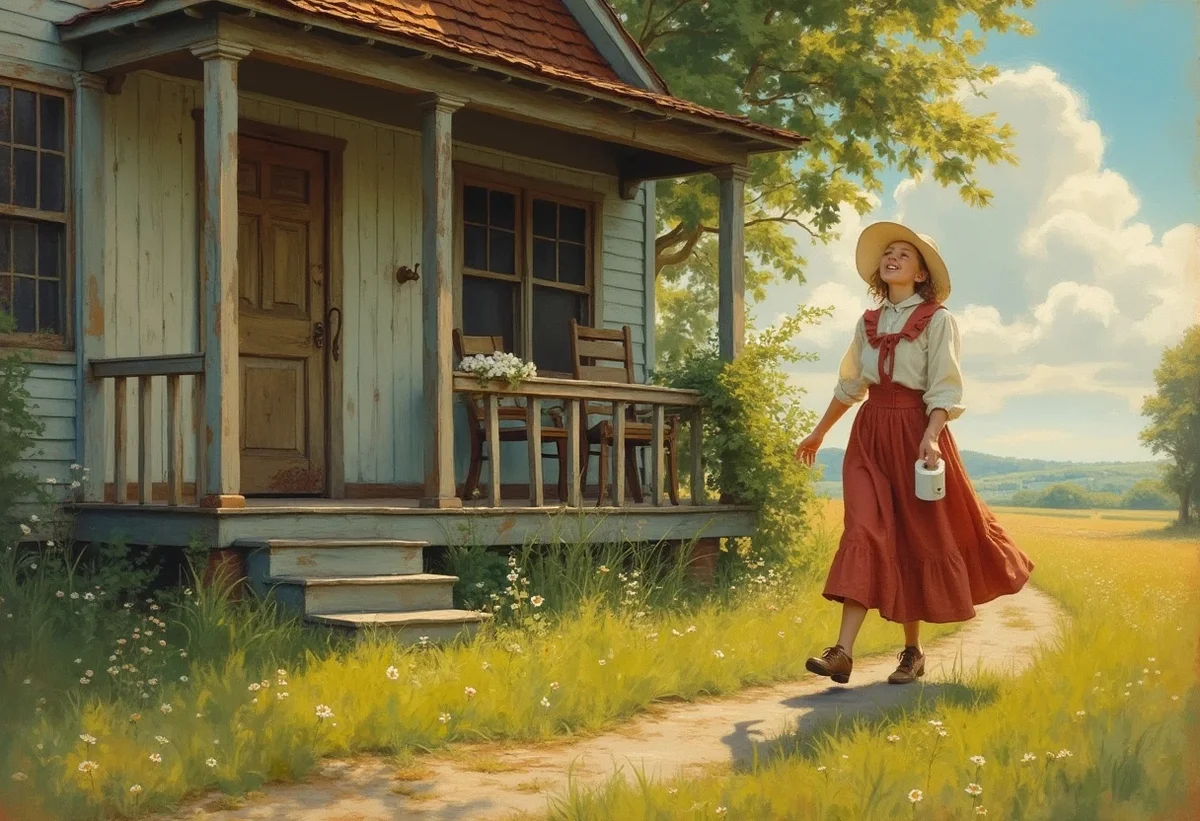
Sarah Hensley drove home from the city on a Tuesday, with a suitcase in the trunk and a “For Sale” sign already ordered from the realtor in town. Her father, Amos, had died three weeks earlier, and the farm — eighty acres of bottomland and hillside, a white house with a sagging porch, a barn that leaned like a tired old man — was hers now. And she was going to sell it.
She had her reasons. She had a teaching job in the city. She had an apartment, a life, a fiancé who had never set foot on a farm. The farm was in debt — she was sure of it. Her father had never had two dollars to rub together. The kindest thing, the sensible thing, was to sell the land, pay off whatever he owed, and move on.
She pulled up the dirt road she had grown up on, parked by the gate, and sat in the car for a long time before she could make herself get out.
The For Sale Sign
The house smelled the way it always had: of woodsmoke and coffee and her father’s pipe tobacco, even though he had quit smoking years ago. Sarah walked through the rooms with a notebook, making lists the way you do when you are trying not to feel anything. Furniture to sell. Furniture to keep. The old piano nobody could tune. The kitchen table where she had done her homework.
She nailed the “For Sale” sign to the fence post by the road, hammered it in hard, and stood back to look at it. It looked wrong. It looked like a stranger’s sign on somebody else’s land.
That night she slept in her old bedroom, under a quilt her grandmother had made, and dreamed of the farm the way it had been when she was small — her father carrying her on his shoulders through the corn, the fiddle music from the porch on summer nights, the whole hollow gathered for hog killings and barn raisings.
The Fiddle in the Attic
The next morning she went up into the attic to sort through her father’s things, and there, in a corner under a canvas cloth, she found his fiddle.
Amos Hensley had played the fiddle at every wedding, funeral and barn dance in the county for forty years. Sarah had not heard it in a decade — not since she had left for college and told him, gently, that the city had no room for fiddle music.
She lifted it out of its case. The wood was warm. The strings were slack but whole. And tucked inside the case, under the velvet lining, was a folded piece of paper in her father’s handwriting: “For Sarah — play it when the house gets too quiet.”
Sarah sat down on the attic floor and cried for the first time since the funeral.
The Drawer of Letters
Downstairs, in her father’s desk, she found the second surprise: a drawer full of letters. Not letters to him — letters from him. Or rather, copies of letters, and thank-you notes, dozens of them, from people all over the hollow.
Mrs. Potter, thanking him for paying for her medicine when her husband was laid off. The preacher, thanking him for fixing the church roof — for free, in the rain. A young couple, thanking him for the loan that saved their farm, a loan he had never told a soul about. Page after page, in his careful handwriting: money lent, roofs fixed, rides given to the hospital in the middle of the night, groceries left on porches with no name attached.
Sarah had thought her father was a poor man. It turned out he had been one of the richest men in the hollow — he had just spent his wealth on other people.
And then, at the very back of the drawer, she found the bank letter. The mortgage. She had been so sure the farm was in debt. The letter said the mortgage had been paid off six years earlier — in cash, in person, by Amos Hensley himself, who had saved for it dollar by dollar in a coffee can on his kitchen shelf.
The farm was not in debt. The farm was free and clear. Her father had left her eighty acres, a house, and not a penny of debt — and a drawer full of proof that he had been loved by every soul in the hollow.
The Auction That Never Happened
On Saturday, the realtor came with a buyer — a developer from the city who wanted the bottomland for houses. Half the hollow came too, standing along the fence in their work clothes, watching.
The developer walked the land with his clipboard. “Good soil,” he said. “We’ll take it all.”
Sarah looked at the crowd by the fence. Mrs. Potter was there, holding her granddaughter’s hand. The preacher was there. The young couple whose farm her father had saved were there, holding a pie.
She thought about the fiddle in the attic. She thought about the letters. She thought about her father, who had spent his whole life quietly holding this hollow together, and who had left her the one thing he had never been able to give her while he was alive: a reason to come home.
She walked to the fence post, pulled the “For Sale” sign out of the ground, and broke it over her knee.
“I’m sorry,” she told the developer. “The farm’s not for sale.”
That autumn, Sarah moved back to the hollow. She took a job teaching music at the one-room school, and on Friday afternoons she taught the children to play her father’s fiddle. On summer evenings she sat on the porch and played the old tunes — the ones her father had played at every wedding and barn dance in the county — and the sound carried down the hollow the way it always had.
The farm was never sold. It did not need to be. It had already given her everything it was ever going to give her: a father she finally understood, a home she had almost thrown away, and a reason to stay.