 By ali4050284
Every sports fan in America knows the feeling. It is Sunday afternoon, the game is about to start, and you need a place where the screens are big, the wings are hot, and everybody in the room is watching the same thing you are. For more than forty years, millions of fans have found that place at Hooters — and the funny thing is, sports were part of the plan from the very first day.
When six friends opened the first Hooters in Clearwater, Florida, in October 1983, they did not really know how to run a restaurant. What they did know was what they liked: cold beer, good bar food, and sports on television. So they built the place they wanted to hang out in themselves — a beach shack with televisions on the walls, a come-as-you-are attitude, and a menu built around wings. The founders later said the goal was simple: a place they could not get kicked out of.
For the first few months, the little restaurant did fine — but it was still just a local spot. Then, in January 1984, Tampa hosted the Super Bowl, and everything changed in a single lunch.
John Riggins, the star running back of the Washington Redskins, walked into Hooters the day before the big game and ate lunch there. After his team won the Super Bowl, he came back with several teammates for a midnight snack. The newspapers picked it up, the television cameras followed, and suddenly a beach bar in Clearwater was a national story. The founders later said the restaurant went from taking in about $2,000 a night to nearly $4,000 almost overnight.
It was the luckiest break a new restaurant could ask for — and it set the pattern for everything that followed. Hooters was not just a place that served food. It was a place where sports happened.
Hooters did not stop at football. In the early 1990s, the brand went racing. Hooters sponsored NASCAR driver Alan Kulwicki, and in 1992 Kulwicki won the Winston Cup championship in the No. 7 Hooters Ford — beating Bill Elliott by just ten points, the closest championship margin in NASCAR history before the modern playoff era. It was a huge moment: a little wing chain’s name on a championship car, in front of millions of race fans.
The story took a sad turn the next spring. In April 1993, Kulwicki was killed in a plane crash near Bristol, Tennessee, while flying back to the track after a sponsor appearance at a Hooters in Knoxville. Also lost in the crash was Mark Brooks, the son of Hooters of America chairman Robert Brooks. The racing world mourned, and Hooters stayed in the sport for years afterward, sponsoring drivers like Loy Allen Jr., Rick Mast and Brett Bodine before stepping away in 2003 — and then returning in 2007 to sponsor a truck series team, and again in 2013 with driver Nelson Piquet Jr.
Hooters’ sports reach went further still. The company once fielded its own team, the Miami Hooters, in the Arena Football League. It sponsored the USAR Hooters Pro Cup, a stock car racing series, and the NGA Pro Golf Tour, a minor league golf tour. Wherever American fans gathered to watch a game, the owl seemed to be there too.
But the real sports story of Hooters is not about sponsorships. It is about what happens inside the restaurants every weekend.
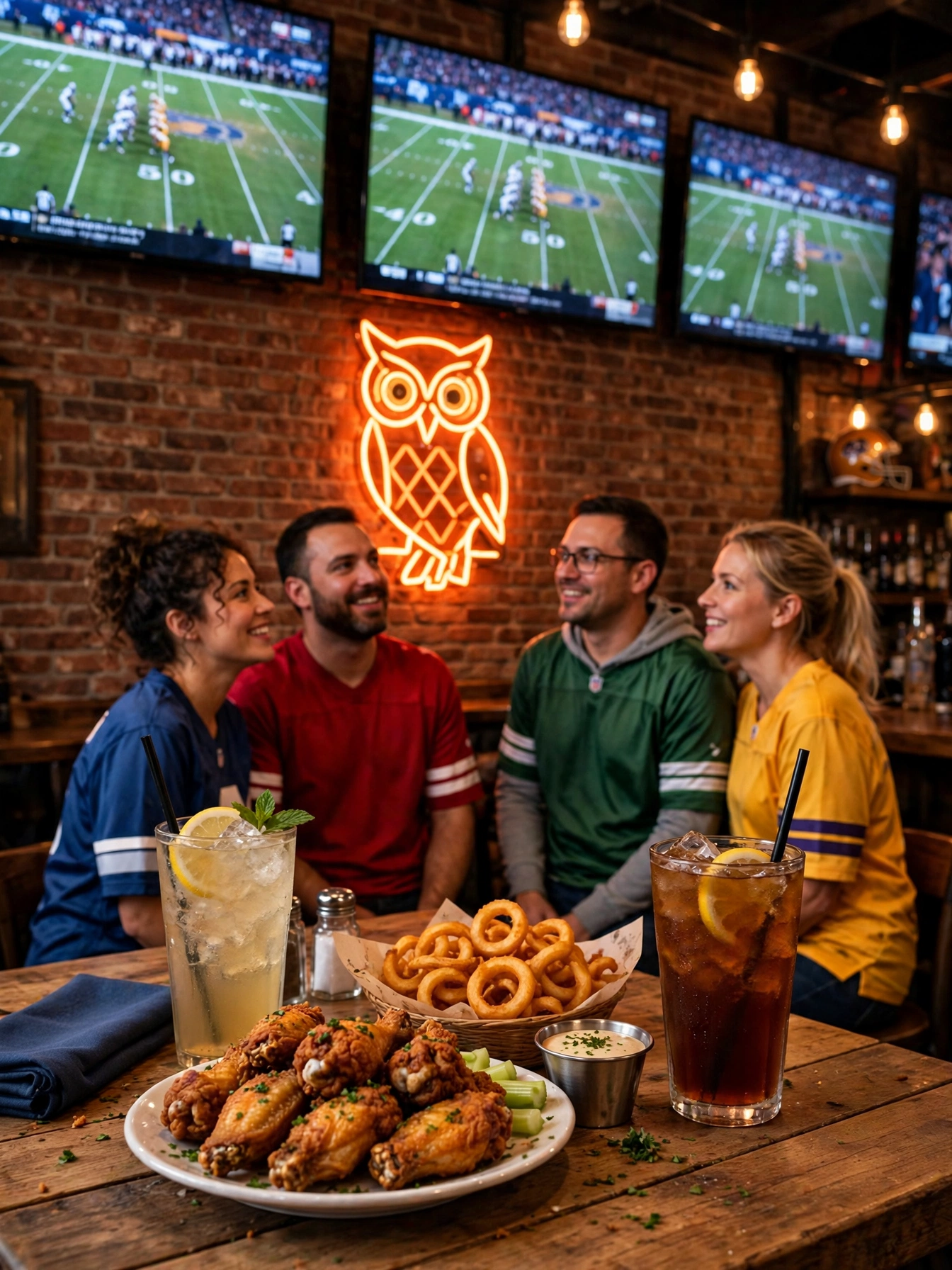
On game day, a Hooters is a living room that happens to seat two hundred people. The screens are everywhere — football on one wall, racing on another, golf or baseball on a third. The wings come out in baskets built for sharing, the curly fries pile up, and strangers in rival jerseys end up talking, arguing and laughing at the same table. Regulars have their lucky seats. Families come in after the kids’ games. Friends plan their whole Sunday around kickoff.
That is the part the founders understood without ever having run a restaurant: people do not just come for the food. They come for the table — for a place where the game matters and everybody in the room knows it.
In 2025, after a difficult few years that ended in a bankruptcy filing, the original Clearwater founders and a group of franchisees bought the company back. Their promise was simple: bring the brand back to its roots — the food, the fun, the sports, and the family-friendly atmosphere that made the first Clearwater restaurant a hit in 1983. The bikini nights were ended, the uniform was made slightly more modest, and the focus went back to what the founders always said mattered most: great wings, cold drinks, and a good time watching the game.
It was a fitting full circle. The six friends who opened a joke restaurant in a failed nightclub had come back, forty-two years later, to save the thing they built — and the first thing they talked about was the food and the game.
So the next time you walk into a Hooters on a Sunday and the whole room rises at once because somebody just scored, remember: that roar started in 1984, with a running back, a plate of wings, and a little Florida restaurant that understood that sports are better when you watch them together. That is what Hooters has always sold — not just dinner, but game day itself.