 By ali4050284
The cardboard box is torn open. Wrapping paper flies everywhere. And there it is — the toy you have been dreaming about for months. That feeling? Pure magic.
The 1960s gave us toys that didn’t need Wi-Fi or software updates. They needed imagination. They needed friends. They needed maybe a couple of D batteries, if you were lucky. These weren’t just toys — they were tickets to other worlds. Space races in the backyard. Fashion shows on the living room floor. Epic battles between good guys and bad guys that always ended right before dinner.
Some of these toys became legends. Others have been sitting in attics for fifty years, waiting to unlock a flood of memories you forgot you had. Here are 21 toys that defined childhood in the ’60s — and might just explain why your kids never understood the appeal of “simple” fun.
1. Barbie
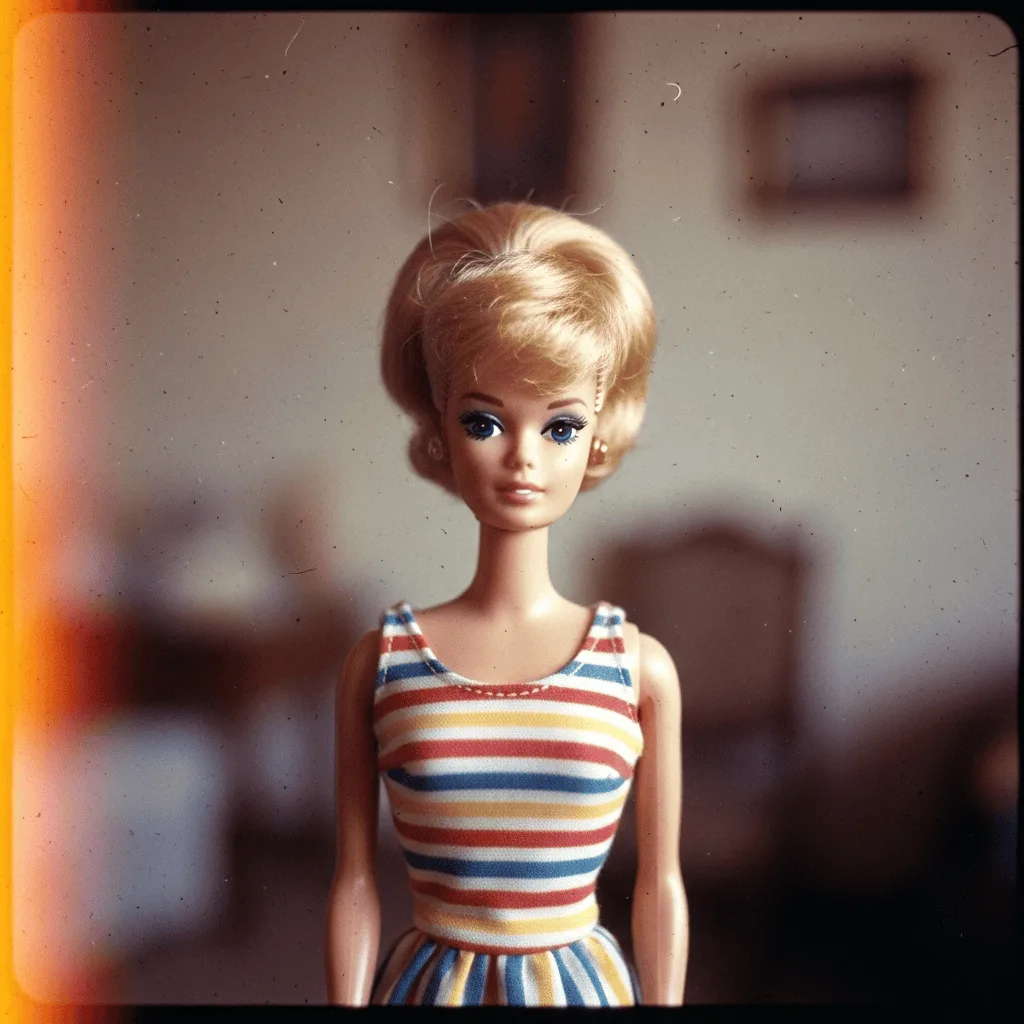
She wasn’t just a doll. She was everything. Astronaut Barbie. Nurse Barbie. Fashion model Barbie. In 1965, she even got bendable legs — revolutionary stuff.
Every outfit came with a story, and every accessory set was a new adventure. Your Barbie probably had a choppy haircut from that time you decided to play hairdresser. Worth it. Ruth Handler named her after her daughter Barbara; she launched in 1959 at $3 and sold about 350,000 in her first year. Then came the family: Ken in 1961, the Dreamhouse in 1962, and Skipper in 1964.
2. LEGO Bricks
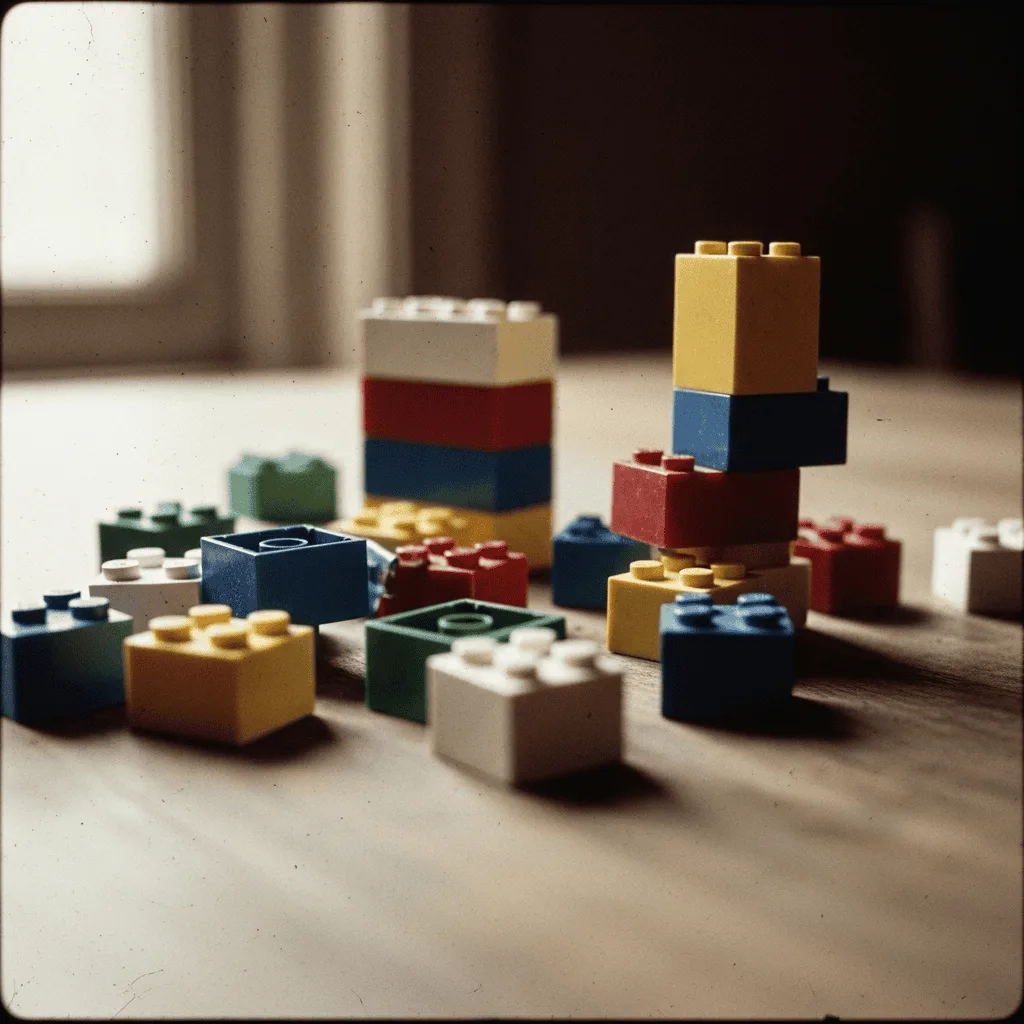
Before there were 400-piece sets with instruction manuals thicker than phone books, there were just bricks. Red ones. Blue ones. Yellow ones. No rules. No right way to build.
That satisfying click when two pieces connected? Still unmatched. The pain of stepping on one barefoot at 2 a.m.? Also unmatched. In America, your bricks probably came from Samsonite — yes, the luggage company — which licensed LEGO in 1961, and the first U.S. LEGO catalogue arrived for Christmas that year.
3. Hot Wheels
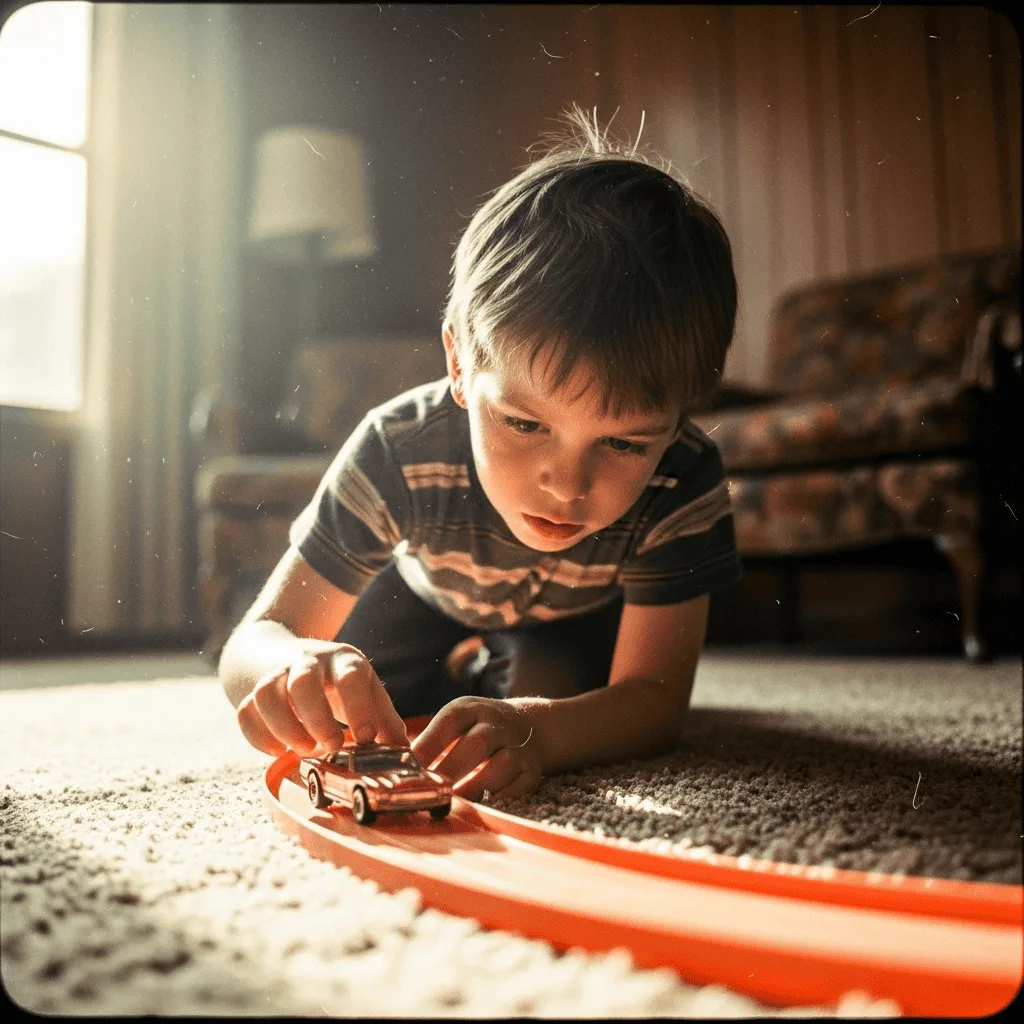
Sixteen cars came out in 1968, and every kid had a favourite. The Custom Camaro. The Python. That sweet orange track you would stretch from the top of the stairs to the kitchen. Speed was everything.
You would spend hours perfecting the loop-de-loop, and then your little brother would knock it over. Every single time. Mattel launched them on May 18, 1968. Their wide plastic tyres had far less friction than Matchbox wheels, and the Spectraflame paint gave each one a candy-coloured metallic shine. By Christmas, Hot Wheels was the season’s best-selling toy.
4. G.I. Joe
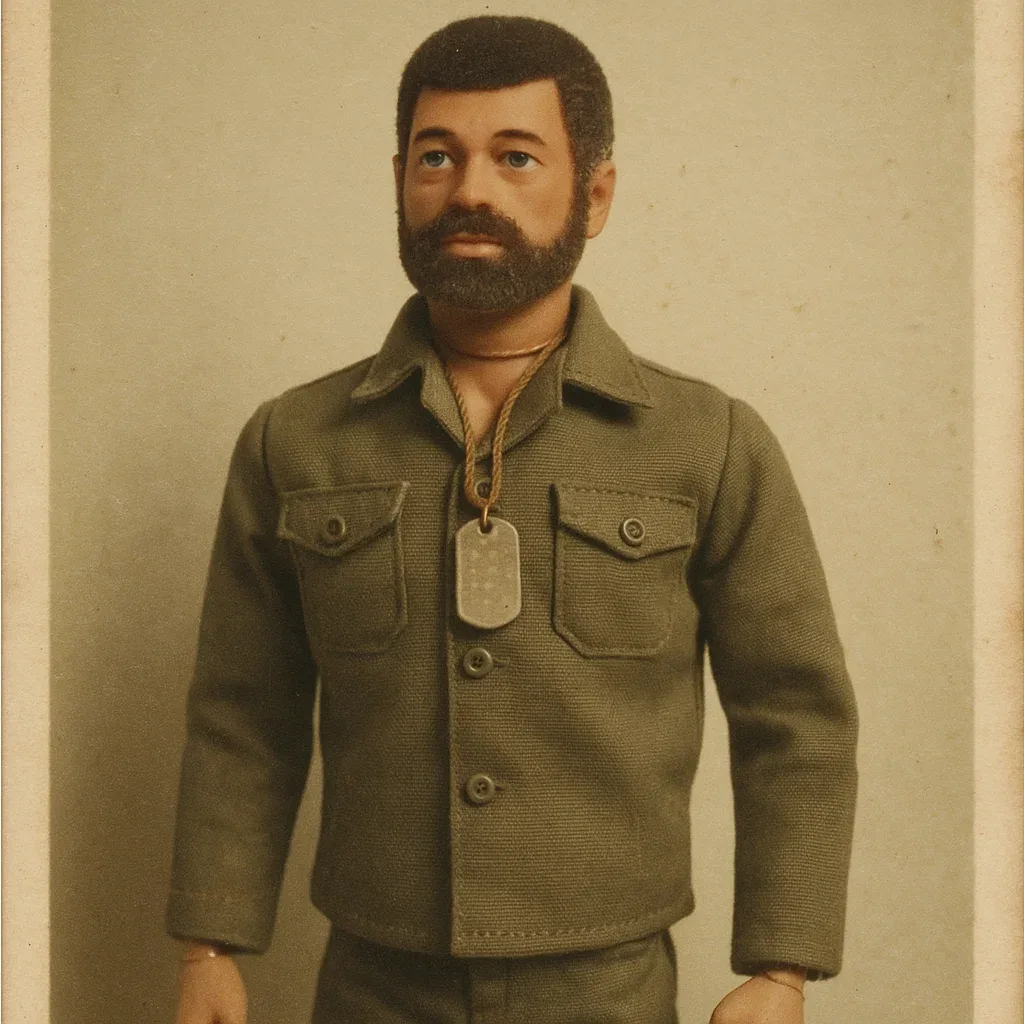
Twelve inches of pure American hero. Moving eyes. Real fabric uniforms that you would inevitably lose piece by piece. He wasn’t a doll — don’t even think about calling him that. He was an action figure. There is a difference.
He hit shelves for Christmas 1964 at $4 apiece, in four branches: Action Soldier, Sailor, Pilot and Marine. Twenty-one moving parts, a scar on his right cheek, and a name borrowed from ordinary World War II soldiers.
5. Matchbox Cars
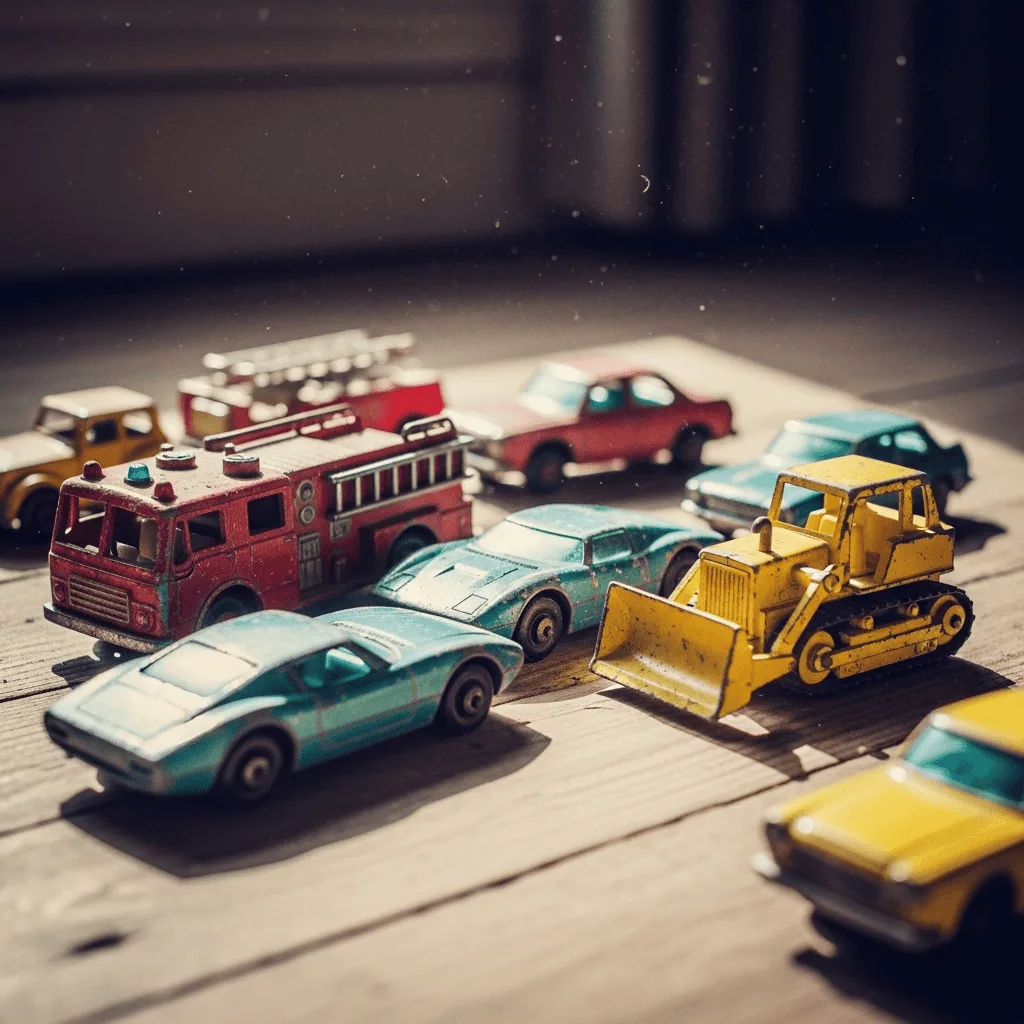
Before Hot Wheels ruled the road, Matchbox was king. Perfectly detailed. Perfectly sized for pockets. Perfectly designed to get lost under the couch forever.
You had that one rare car everyone wanted to trade for. You never did. Smart move. The name came from a 1953 school rule: Jack Odell’s daughter could only bring toys that fit in a matchbox. Lesney of England made them, and by 1968 Matchbox was the best-selling brand of small die-cast toy cars in the world.
6. Easy-Bake Oven
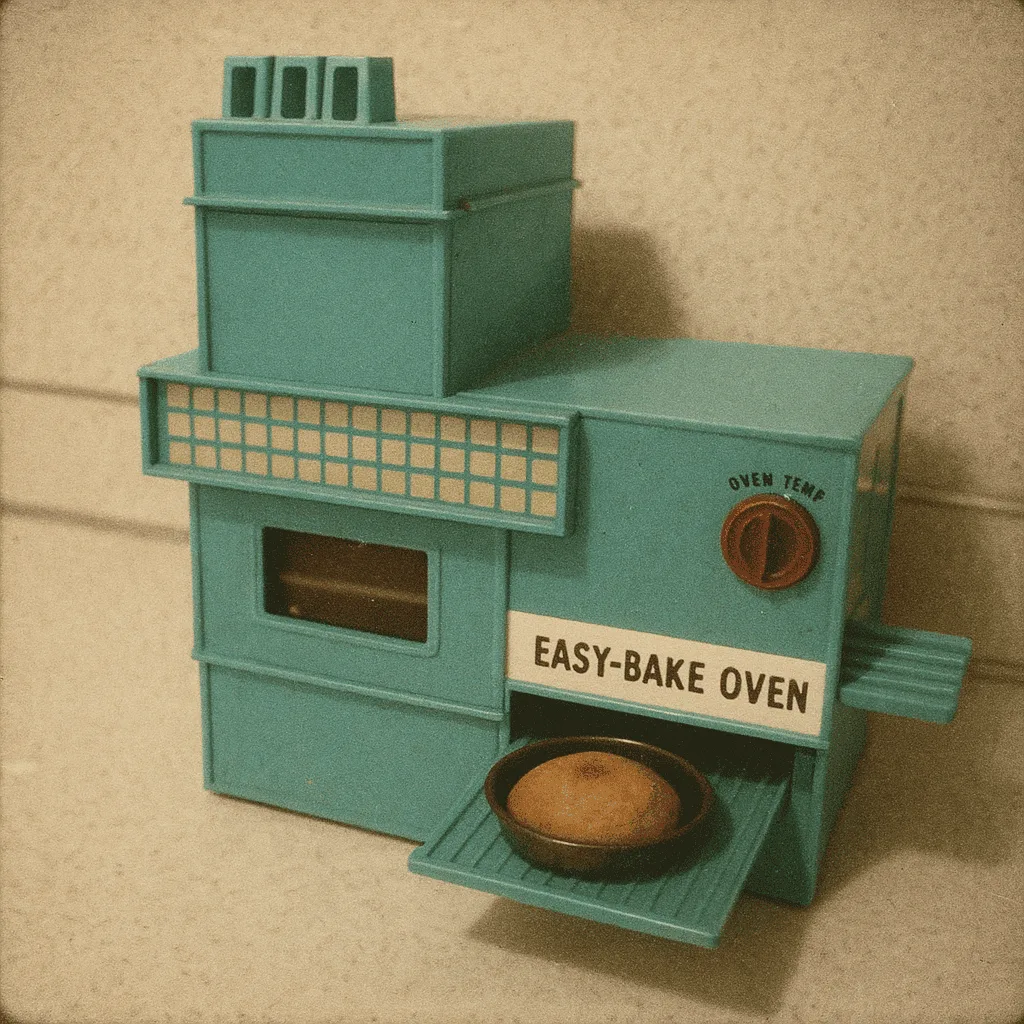
A real working oven. Powered by a light bulb. What could go wrong? Those tiny cakes tasted terrible. Nobody cared. You were a chef. A baker. A culinary genius making brownies the size of a silver dollar.
Mum pretended they were delicious. You knew better. You made them anyway. Kenner’s 1963 original came in turquoise or pale yellow and sold for $15.95 — steep money for a toy back then. It used two 100-watt bulbs, one above the tray and one below, and Kenner still sold 500,000 in the first year.
7. Etch A Sketch
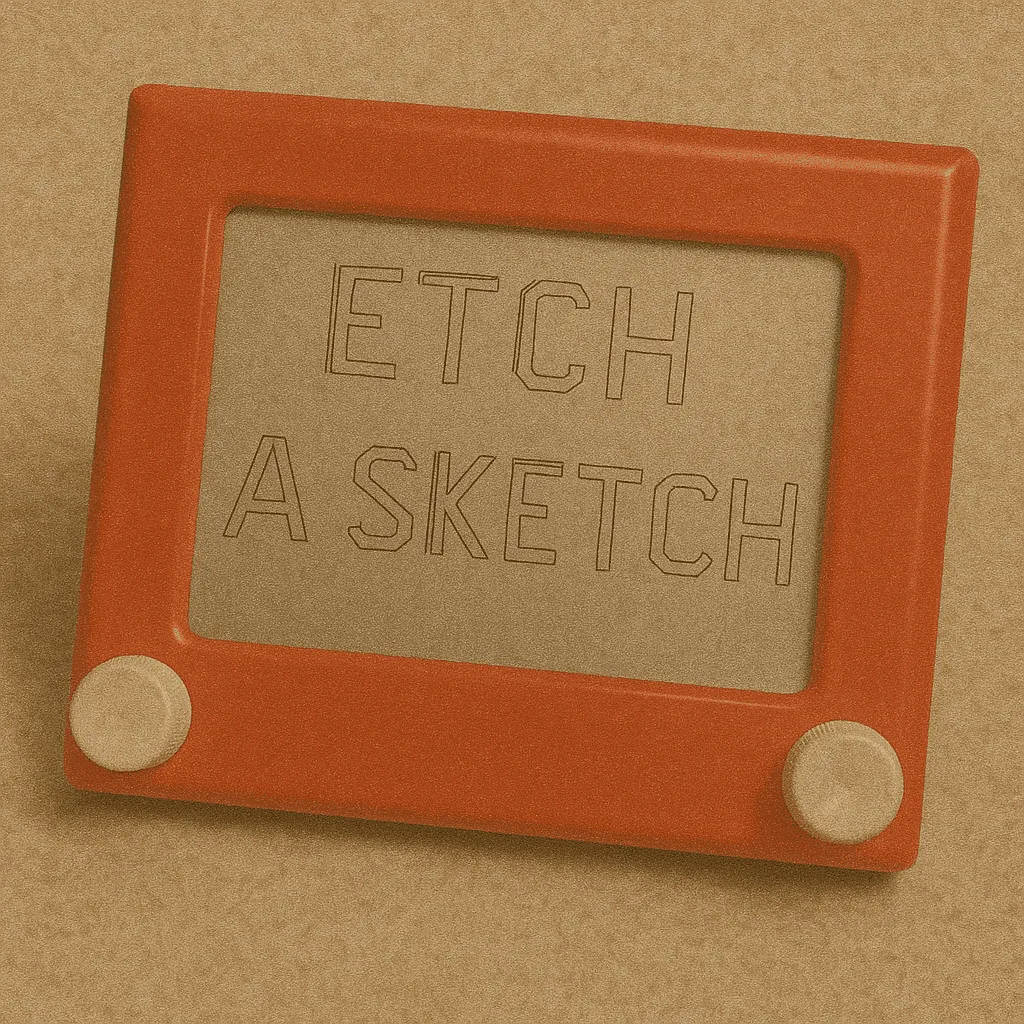
Two knobs. Infinite possibilities. Except circles. Circles were impossible. You would spend an hour creating a masterpiece, then someone would shake it. Gone forever. No save button. No second chances. The original lesson in letting go.
Ohio Art launched it on July 12, 1960, at $2.99, and the factory in Bryan, Ohio, ran until noon that Christmas Eve. Its French inventor, André Cassagnes, called it L’Écran Magique — the magic screen — and Ohio Art sold 600,000 in that first year.
8. Lite-Brite
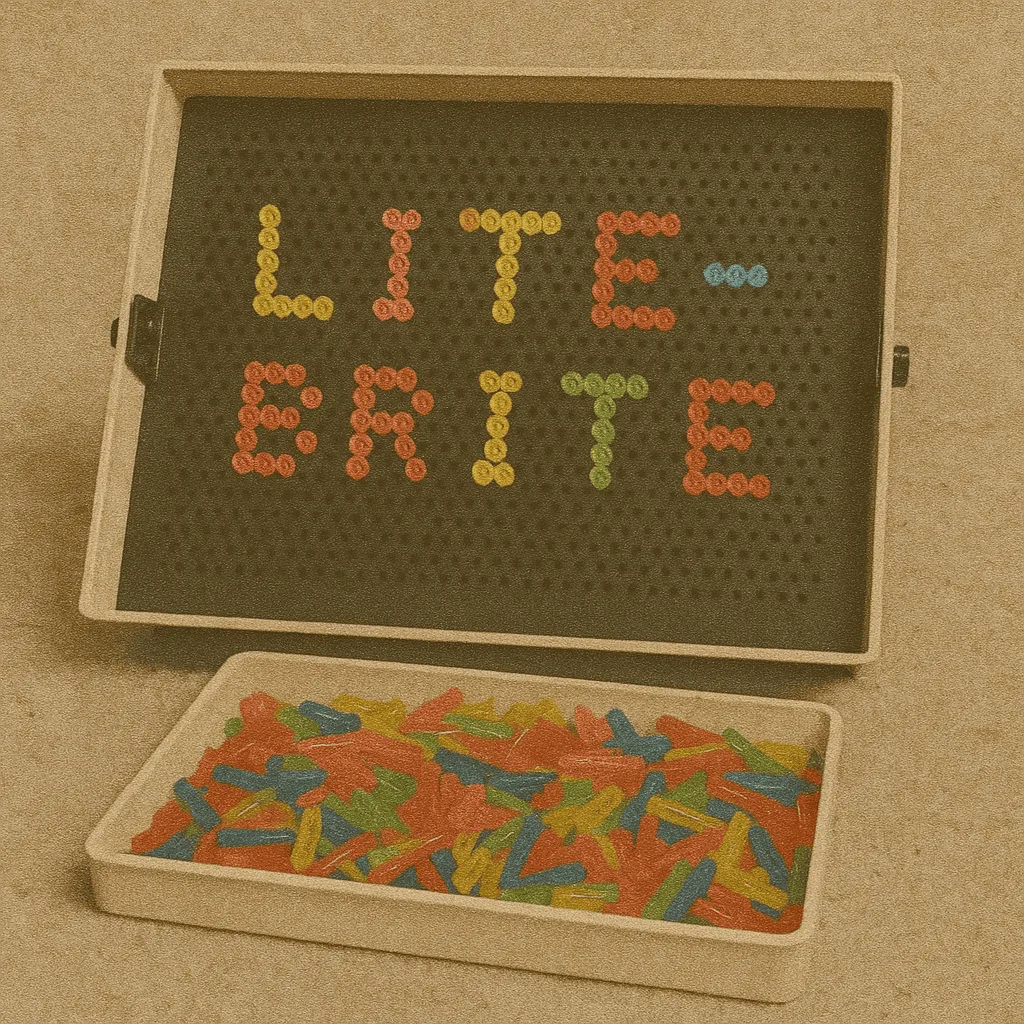
Making art with light before Instagram filters were a thing. Those little plastic pegs got everywhere — under furniture, in the carpet, in the vacuum cleaner. But when you turned off the lights and saw your glowing creation? Magic. Pure magic.
Hasbro released it in 1967. The spark was a 1966 New York City window display of hundreds of coloured lights. A 25-watt bulb glowed behind black paper, and the pegs came in eight colours, from red and blue to pink and violet.
9. View-Master
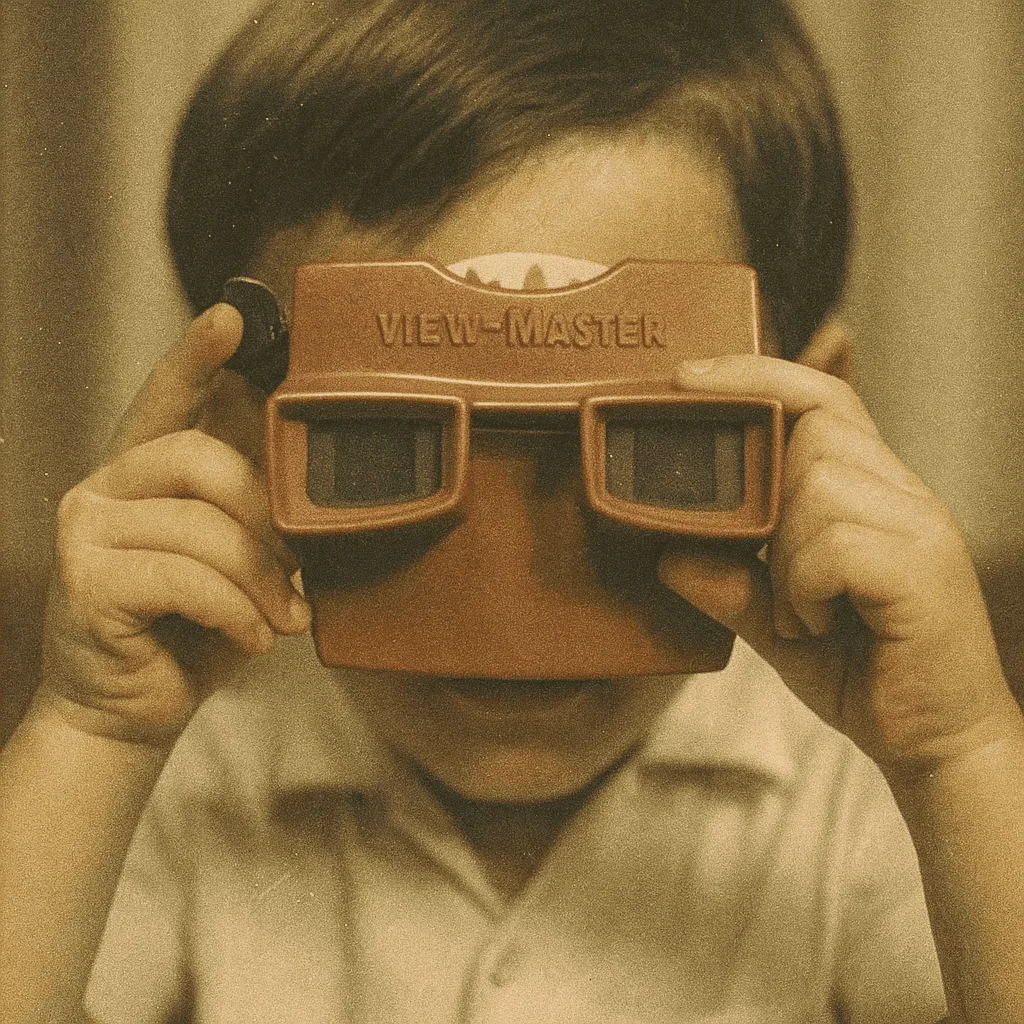
3D before 3D was cool. Click. New scene. Click. New scene. Click. You would beg for new reels at the store — scenic America, Disney characters, space scenes that made you feel like an astronaut. Seven pictures per reel. Never enough.
Sawyer’s of Portland, Oregon, made them. In 1962, the Model G viewer swapped heavy Bakelite for lighter plastic. Each picture was really two tiny slides, one for each eye, and the reels held fourteen pictures and came in packs of three.
10. Spirograph
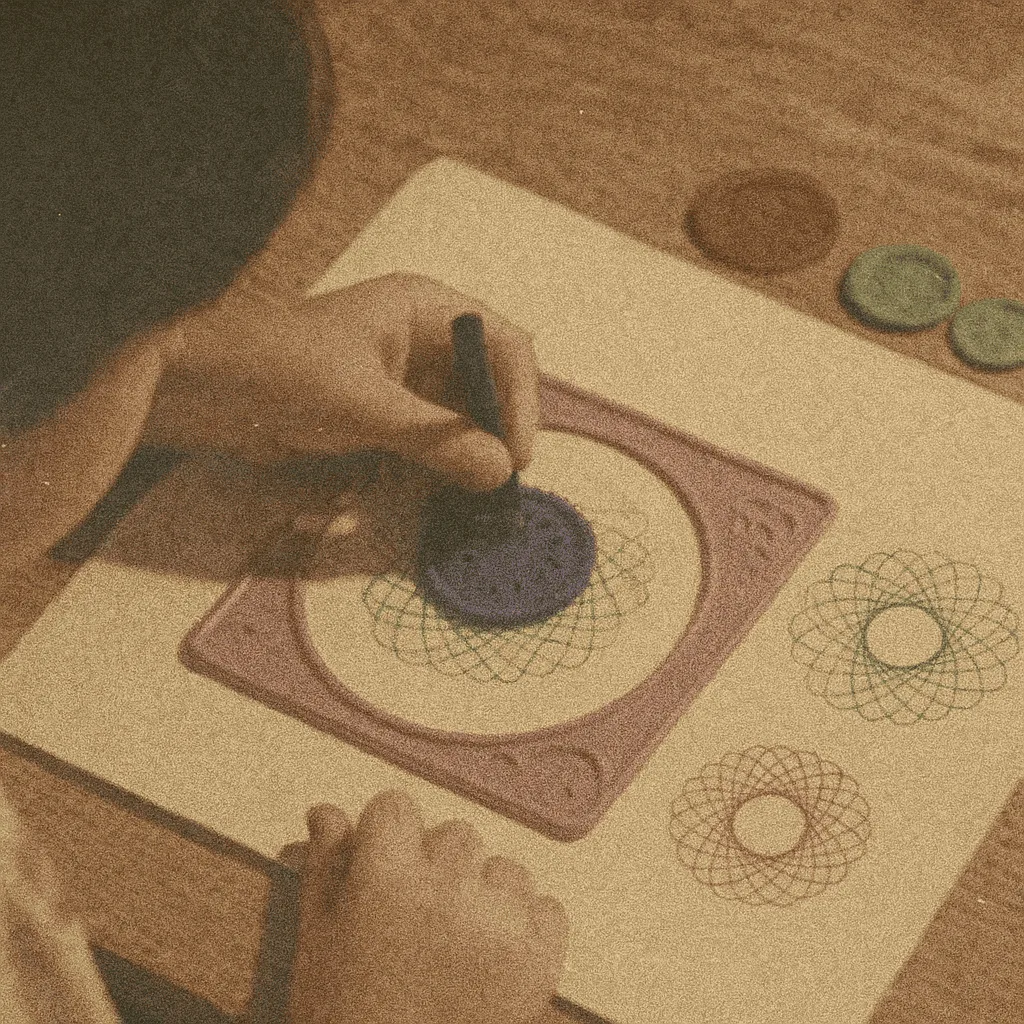
Mathematical art that made you feel like a genius. The pen would slip. The gear would jump. You would start over seventeen times. Then suddenly — perfection. A geometric flower worthy of the refrigerator gallery.
You kept every design. Mum probably still has them somewhere. British engineer Denys Fisher built prototypes from Meccano pieces between 1962 and 1964, and Kenner brought it to America in 1966. Plastic rings and gearwheels, with holes for a ballpoint pen — that was the whole kit behind those intricate drawings.
11. Rock ‘Em Sock ‘Em Robots
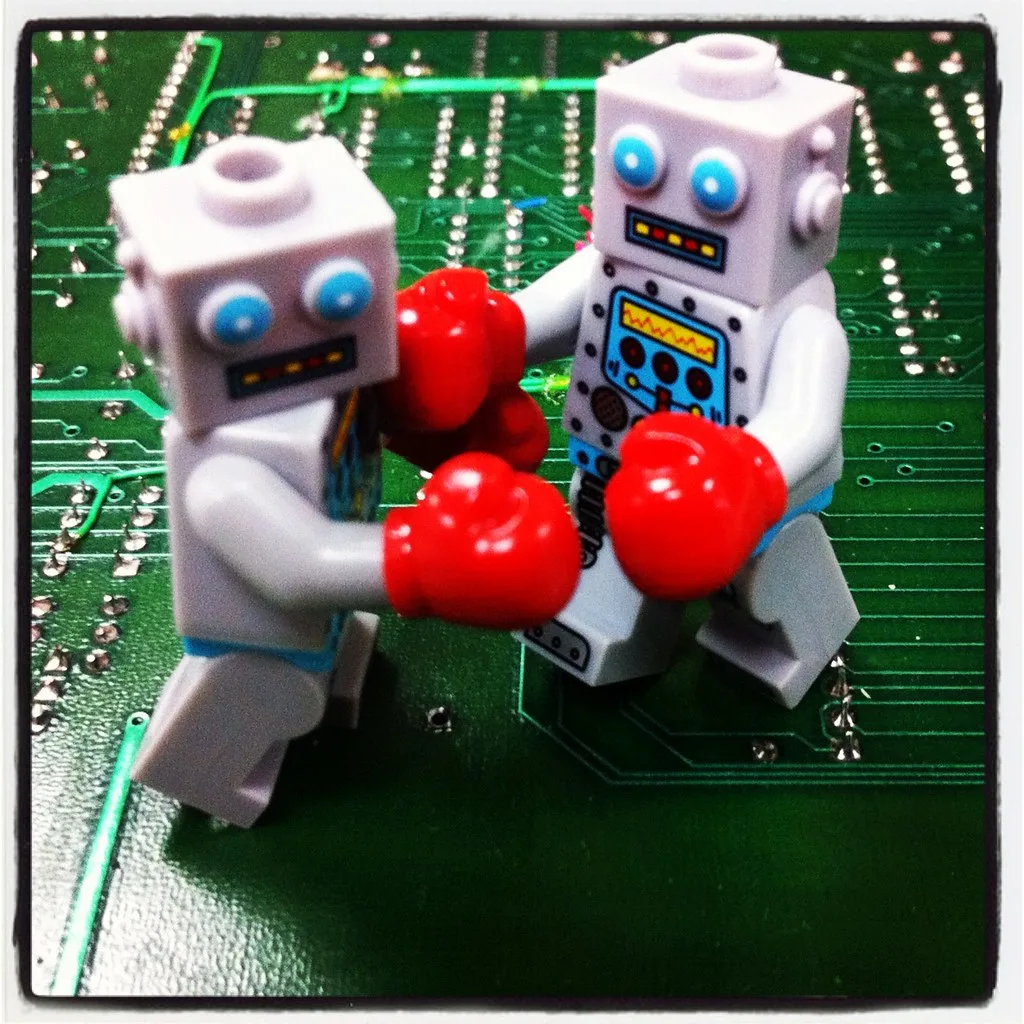
Red Rocker versus Blue Bomber. The only rule? Knock his block off. The springs would get loose. The heads would barely stay on. It didn’t matter. This was gladiator combat for the elementary school set.
Louis Marx and Company had them in stores for 1964. The inspiration was a 1948 arcade boxing machine called Silver Gloves, and designer Burt Meyer wanted robots that fall apart, not humans that fall over. You worked each boxer with joystick-style controls.
12. Operation
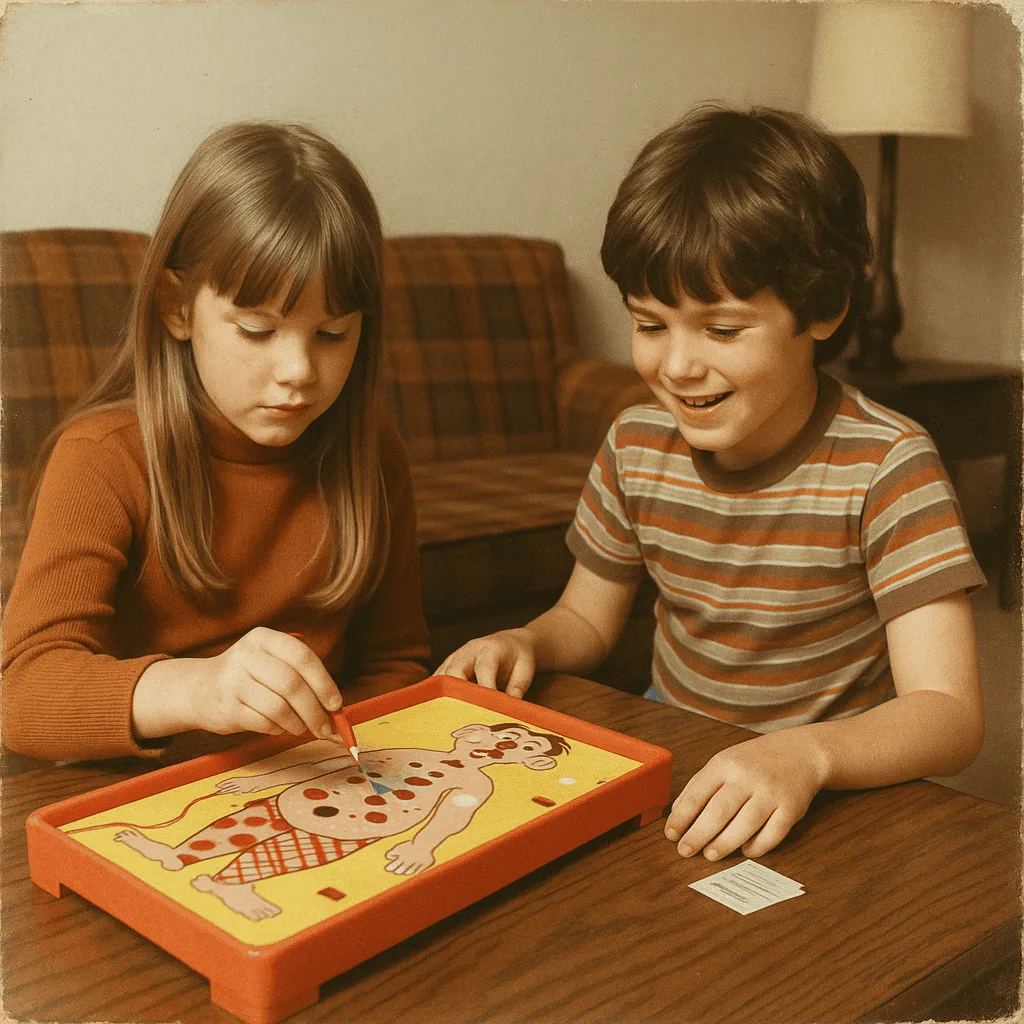
The game that taught you two things: steady hands, and anatomy words you would forget immediately. That buzzer was terrifying. Butterflies in the stomach. Charley horse. Water on the knee. You never became a surgeon — but you could remove a plastic wishbone like nobody’s business.
Milton Bradley released it in 1965. Its inventor, University of Illinois student John Spinello, sold his rights for $500. The patient was Cavity Sam, red light-bulb nose and all, and removing his Bread Basket paid the top doctor’s fee: $1,000.
13. Mouse Trap
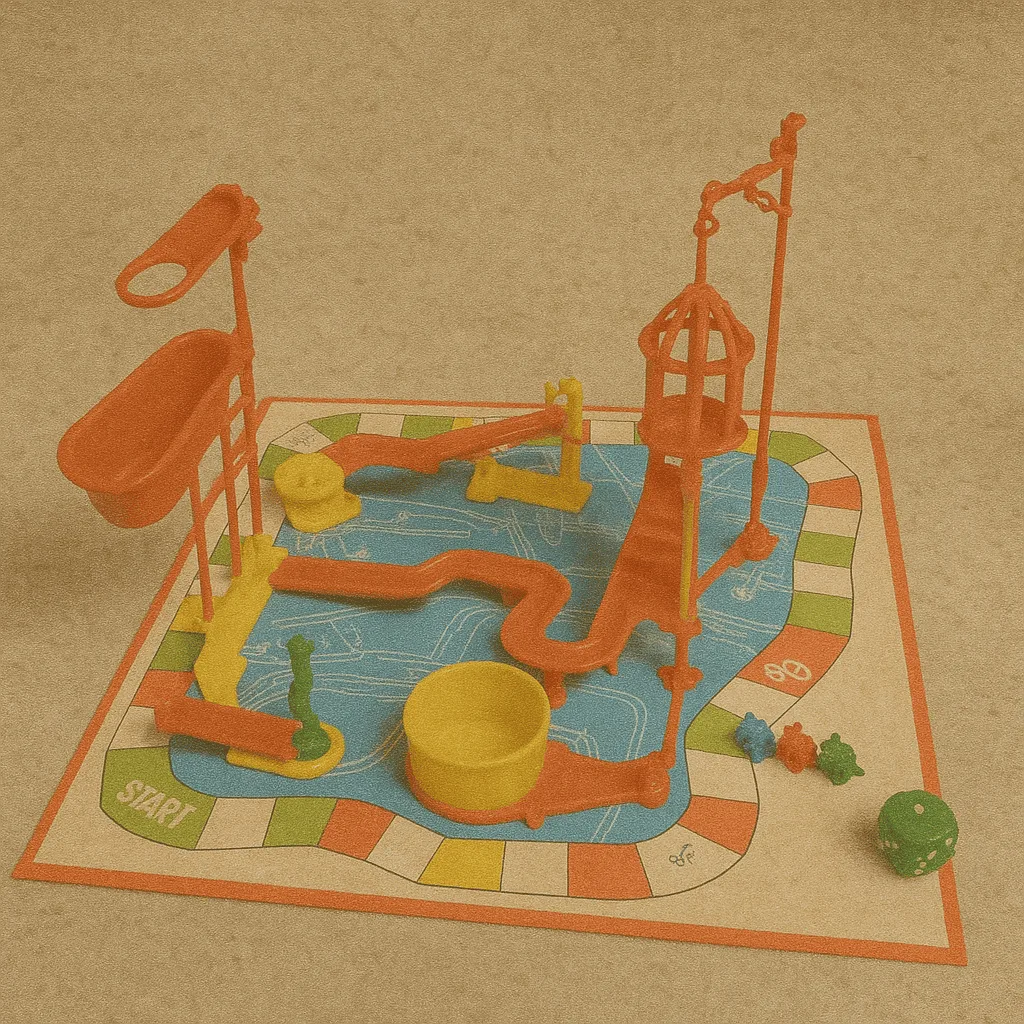
Nobody actually played Mouse Trap by the rules. You built the contraption. You triggered it. You watched the marble go. That’s it. That’s the game.
The diving man. The bathtub. That rickety cage at the end. Engineering at its finest. Ideal released it in 1963, one of the first mass-produced 3D board games, and it sold 1.2 million copies that year alone. Milton Bradley’s president reportedly dismissed it as “a lot of plastic junk” — yet Ideal sold over a million.
14. Twister
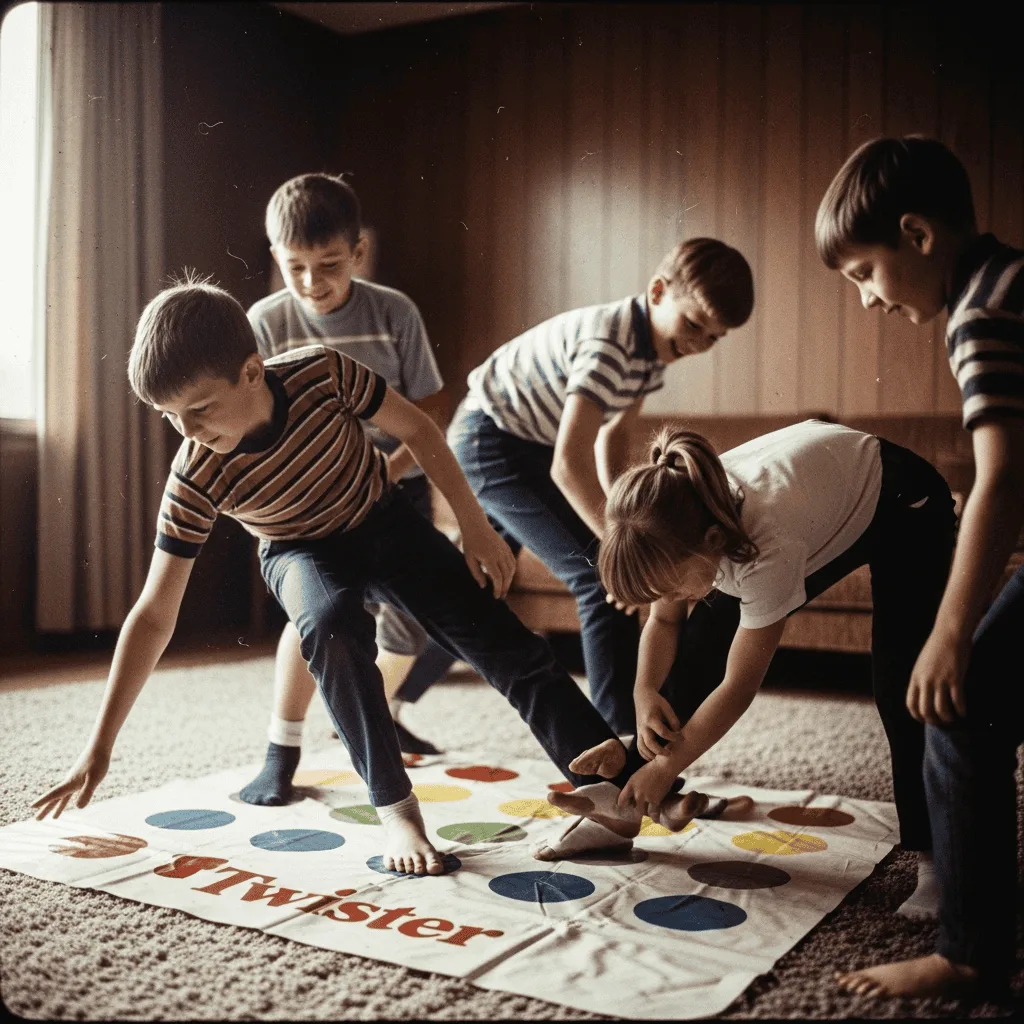
The game that turned your living room into a pretzel factory. Right foot red. Left hand yellow. Face planted in the carpet. Parents loved it at parties, and kids loved the excuse for sanctioned chaos. Someone always fell first on purpose. We all knew who.
Milton Bradley’s 1966 game was first called “Pretzel.” Rivals accused the company of selling “sex in a box.” Then Eva Gabor played it with Johnny Carson on The Tonight Show on May 3, 1966 — and sales took off.
15. Battleship
B-4. Miss. A-7. Miss. C-3. “You sank my battleship!” The original screen time was a plastic grid and your imagination. You definitely cheated. So did your brother. Nobody talked about it.
Kids had played it with pencil and paper since World War I. Milton Bradley’s plastic pegboard version arrived in 1967, and each player hid a fleet of five ships on a 10-by-10 grid, from a five-square carrier to a two-square destroyer.
16. Lincoln Logs
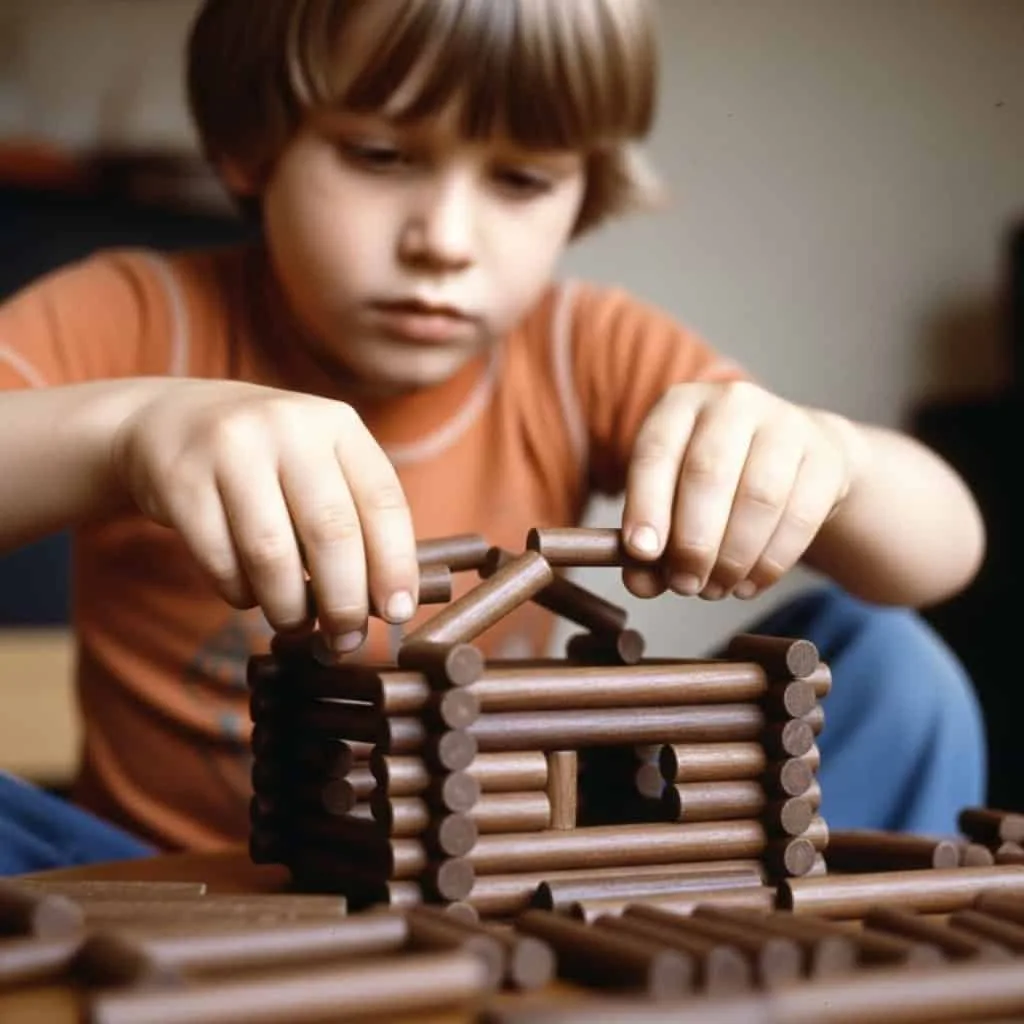
Before there were detailed instructions, there was a tin of notched wood. Build a cabin. Build a fort. Build something that vaguely looked like a cabin-fort hybrid. The smell of that wood? Unforgettable. They still make them. They still smell the same.
Frank Lloyd Wright’s son, John Lloyd Wright, invented them around 1916 and sold out to Playskool in 1943 for $800. So the ’60s sets were really Playskool sets, and the box once promised “interesting playthings typifying the spirit of America.”
17. Slip ‘N Slide
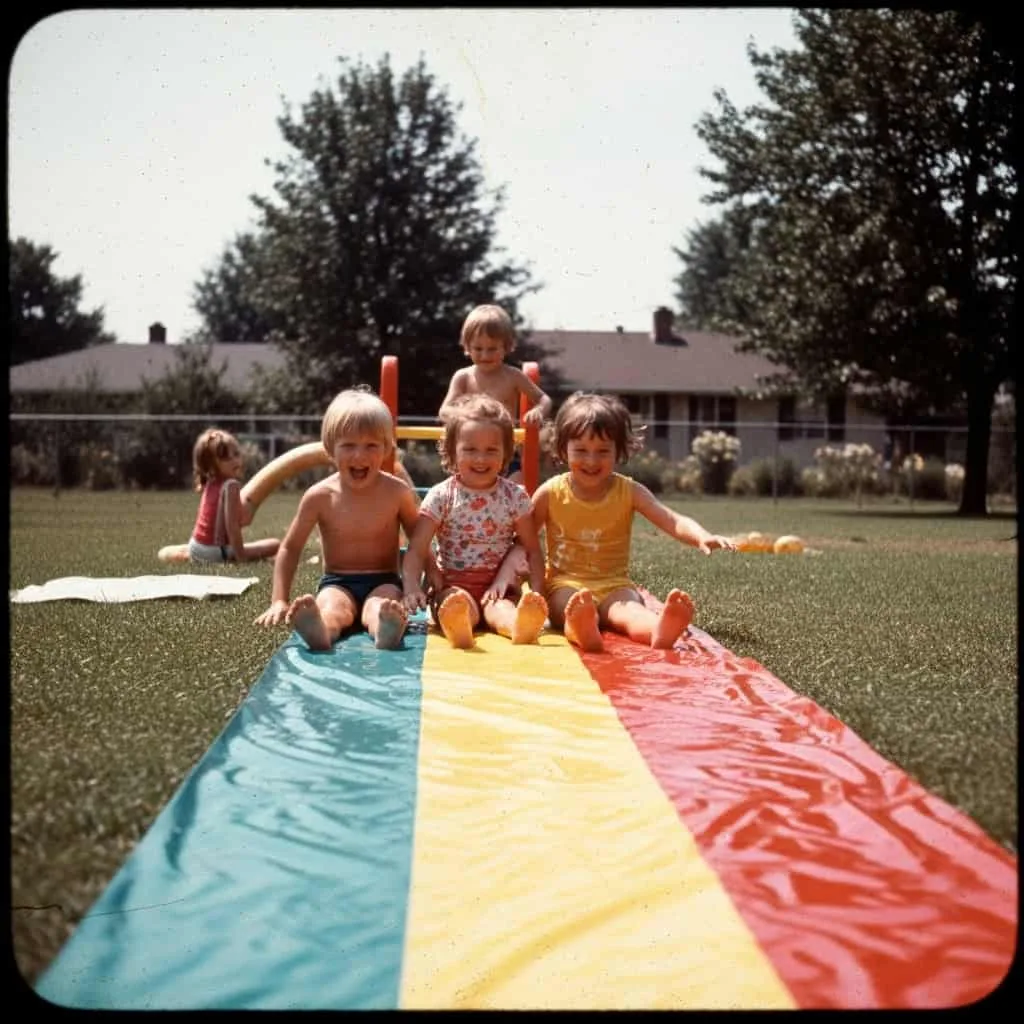
Twenty-five feet of yellow plastic that turned your backyard into a water park. The grass died. Dad was mad. You didn’t care. That one kid who always went too fast and slid off the end into the dirt? Legend. The bruises were worth it.
Wham-O began selling it in 1961. Robert Carrier invented it after watching his son Mike slide on a wet driveway. His prototype was Naugahyde from his upholstery job; Wham-O switched to plastic and sold 300,000 at $9.95 within months.
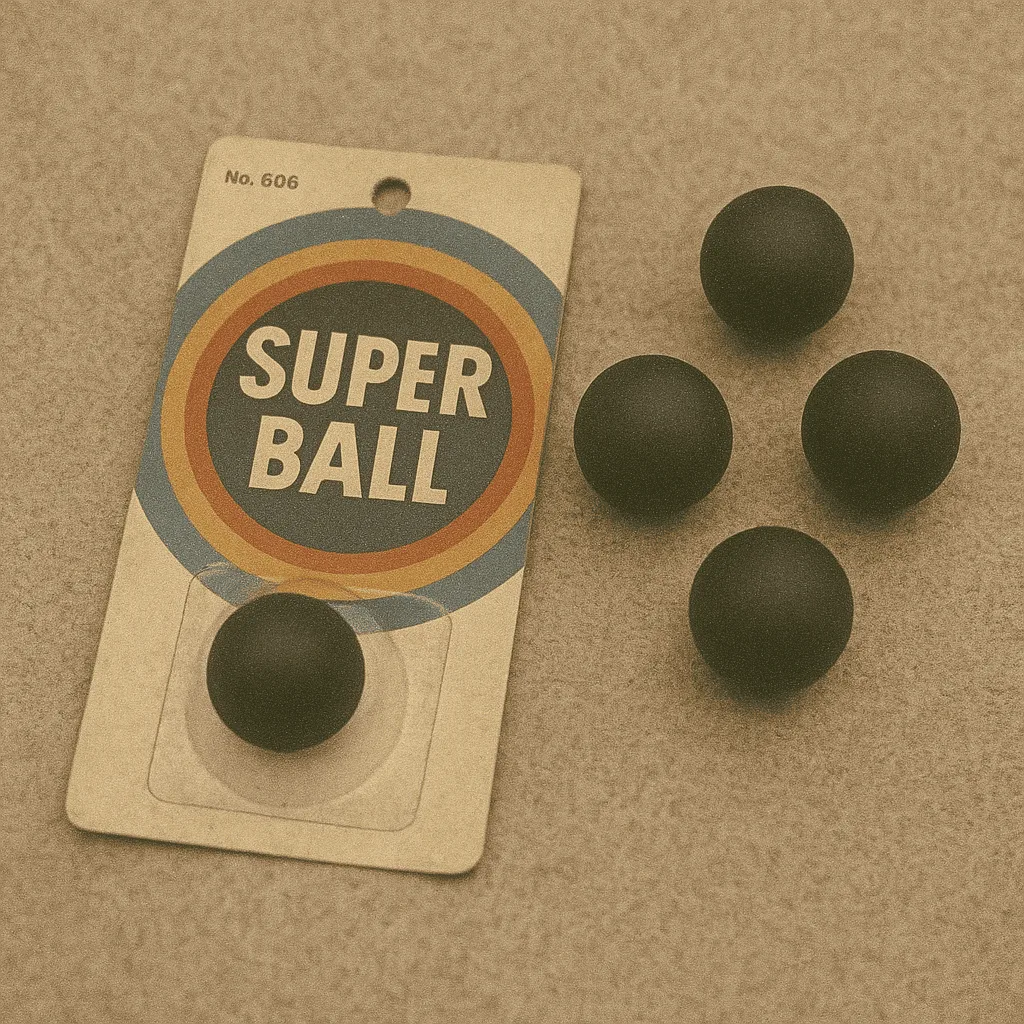
18. Super Ball
It wasn’t just a ball. It was a physics experiment gone wild. Bounce it hard enough, and it would disappear into the stratosphere. Every kid claimed theirs bounced higher. Every kid was lying. Lost on the roof. Every single one.
Wham-O launched it in 1965 for 98 cents. The secret was “Zectron,” a synthetic rubber invented by chemist Norman Stingley. Over 6 million sold by December 1965, and the story goes that it inspired pro football’s Lamar Hunt to coin the term “Super Bowl.”
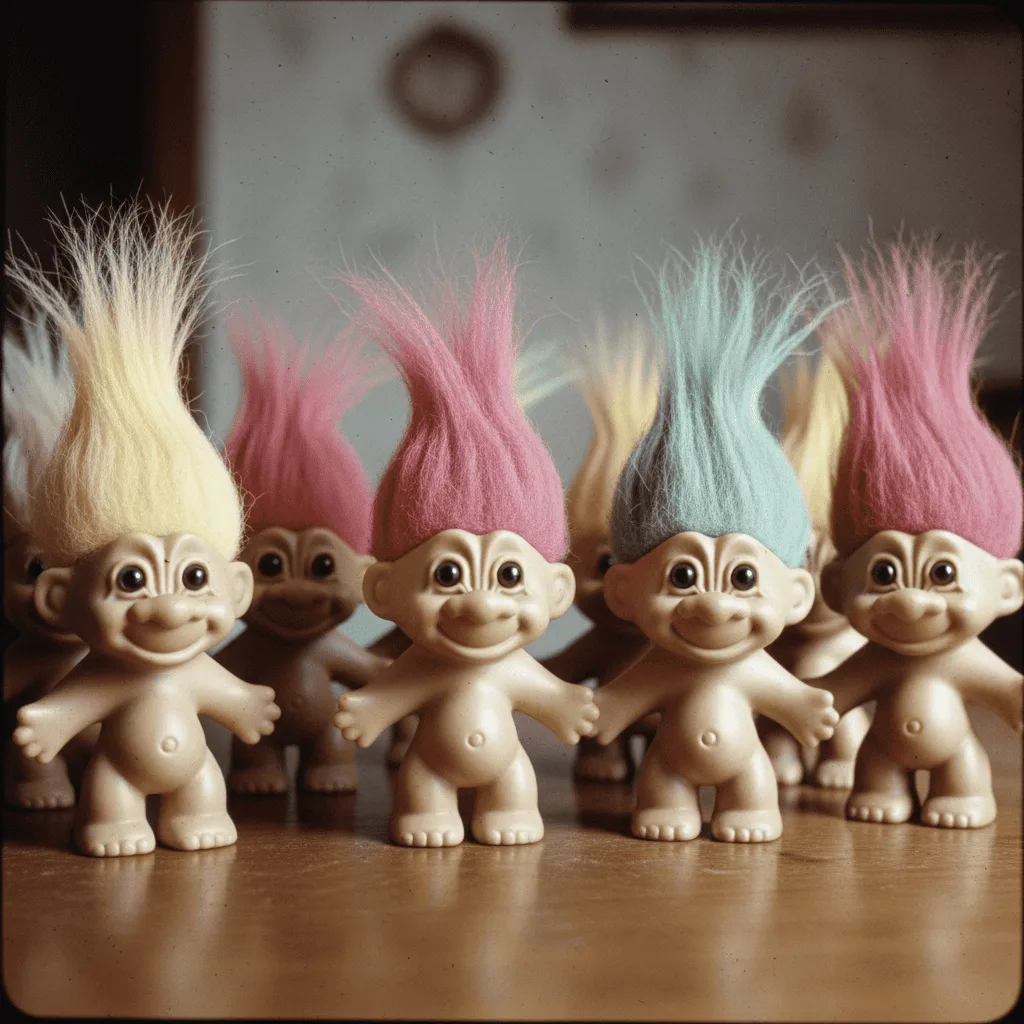
19. Troll Dolls
Neon hair. Jewelled belly buttons. Absolutely no explanation for why we loved them. You would brush that hair for hours — style it, braid it, make it stand straight up. They were ugly. We knew it. We loved them anyway.
Danish woodcarver Thomas Dam made the first ones for his own children. America went troll-crazy from the fall of 1963 to 1965. The originals had glass eyes and sheep-wool hair, and by 1964, Dam’s company had reportedly used up Iceland’s entire sheepskin harvest.
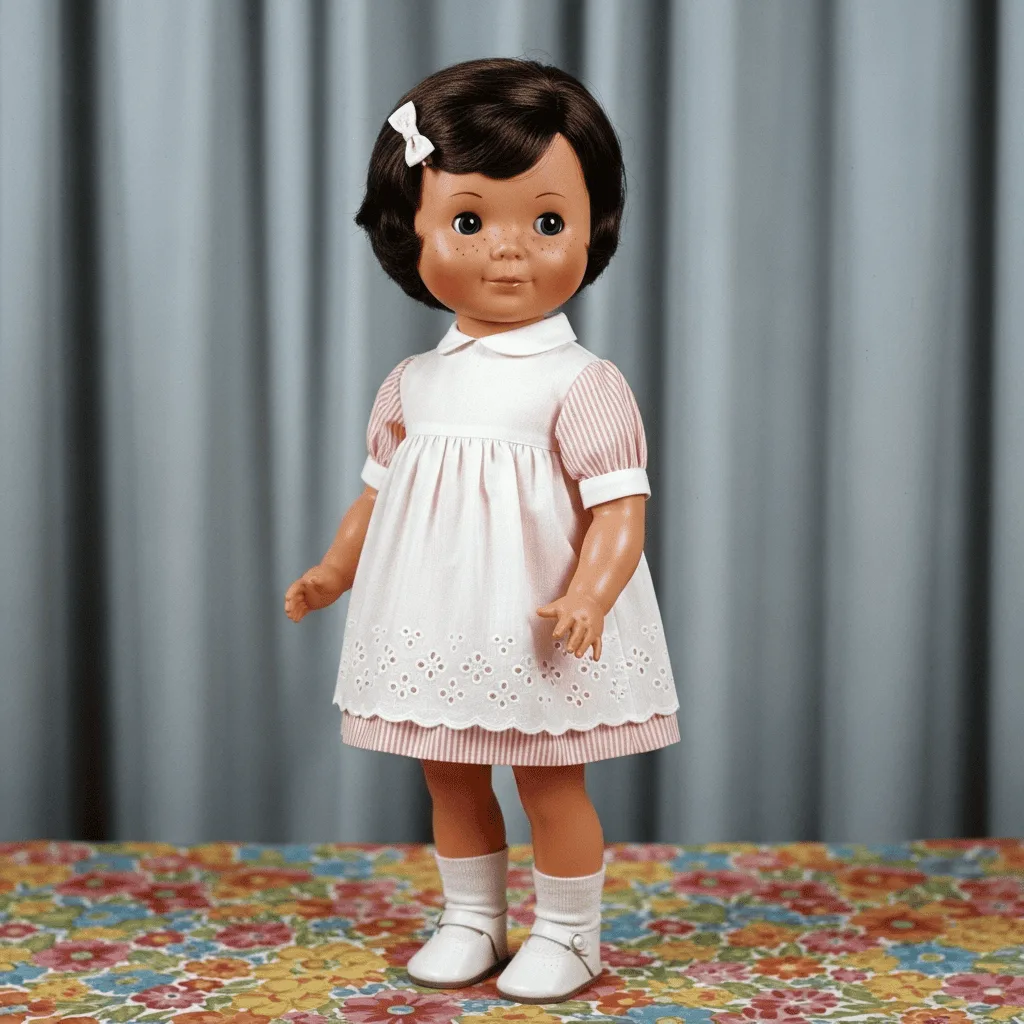
20. Chatty Cathy
Pull the string. Hear her talk. Mind. Blown. “I love you.” “Please take me with you.” “Let’s play house.” Eleven phrases on repeat until the string broke. Then she became Silent Cathy. Still loved. Just quieter.
Mattel’s Ruth and Elliot Handler created her in 1959. June Foray voiced her, on a tiny record hidden behind her tummy. The suggested retail price was $18, though catalogue ads usually sold her for under $10, and in 1963 she learned seven more phrases.
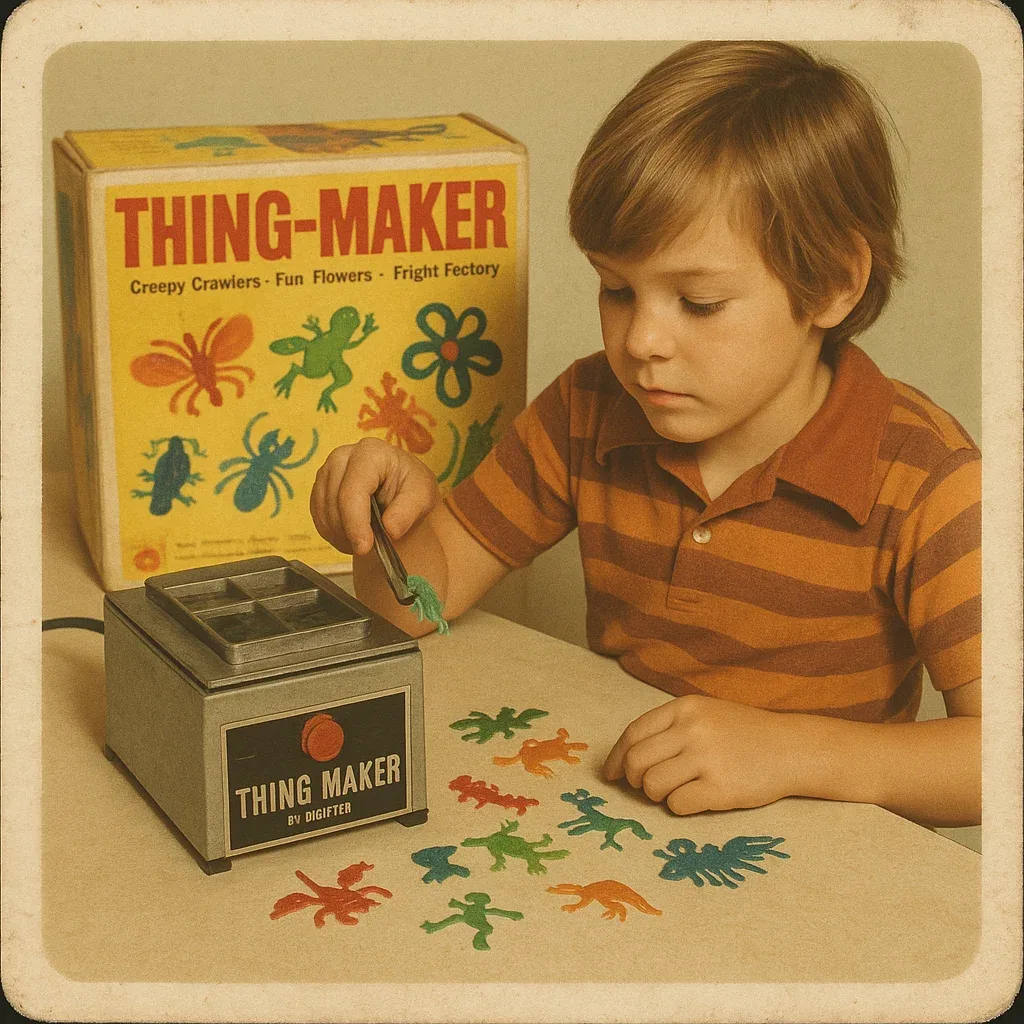
21. Creepy Crawlers (Thingmaker)
Pour goop into moulds. Heat them up. Create rubber bugs. The smell? Toxic. The burns? Inevitable. The fun? Unlimited. You would make an army of spiders and hide them everywhere. Mum found them for years.
Mattel’s 1964 Thingmaker heated liquid Plasti-Goop in die-cast metal moulds to about 390°F, on an open-face hot plate — for kids. In 1966, the Fright Factory brought fake scars and monster teeth, while Fun Flowers offered flowers from the same goop-making world.
These weren’t just toys. They were time machines. Pick one up today, and you’re eight years old again. Saturday morning. No plans except playing until the streetlights come on.
They taught us to imagine. To create. To compete. To share — sometimes. No passwords. No updates. No screen time limits. Just pure, simple play. Maybe that’s why we keep them, hidden in basements and attics, waiting in boxes marked “childhood” in faded marker. Because someday, we’ll pass them down. And when we do, we’re not just handing over toys — we’re handing over stories. Our stories. The chapters of our lives measured in Barbie outfits and Hot Wheels tracks.
And that is what family history really is — not just names and dates in a family tree, but the toys we played with, the games we loved, and the memories that made us who we are.