 By ali4050284
Close your eyes and listen. There is a sound that takes you straight back fifty years: the deep, rolling rumble of a V8 engine, the soft click of a chrome door handle, the whirr of a window rolling down by hand. It is the sound of a classic car — and for the generation that grew up with them, it is the sound of youth itself.
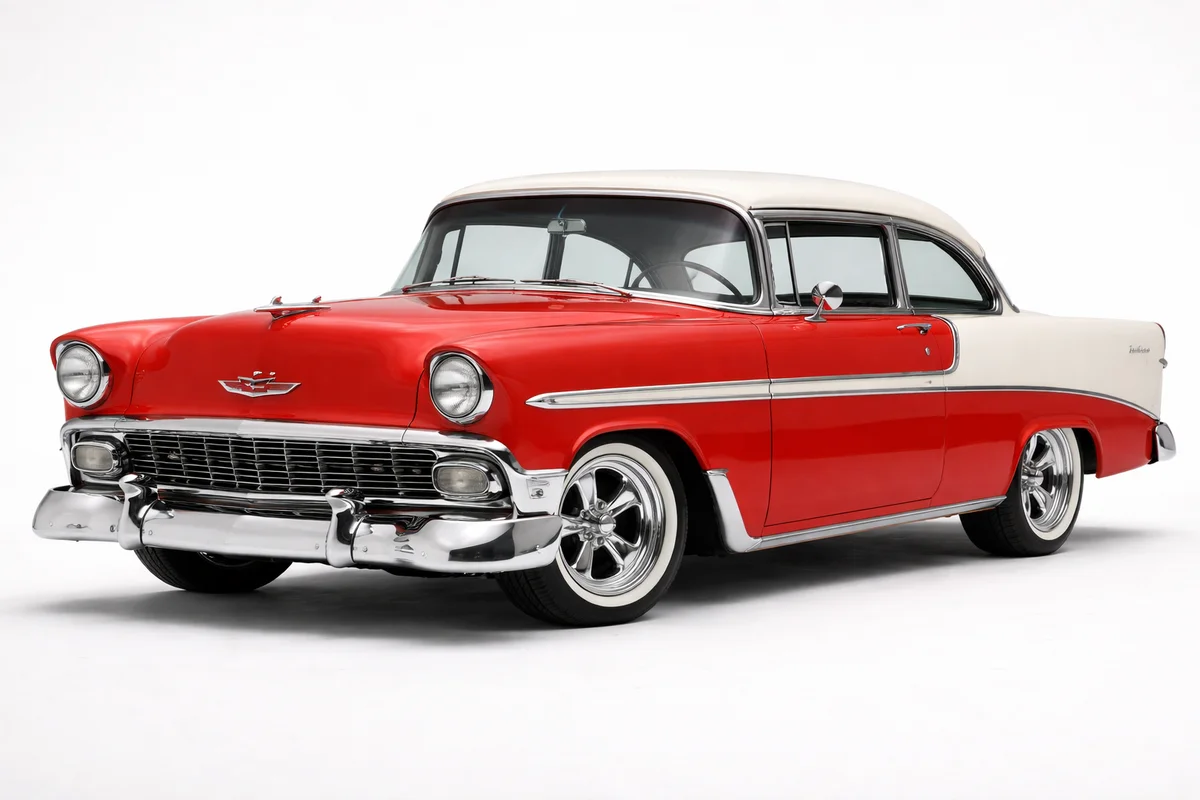
The classic cars of the 1950s, 60s and 70s were not just machines. They were dreams you could drive. They had tailfins like jet planes, chrome like jewellery, and paint in colours with names like “Candy Apple Red” and “Seafoam Green.” They were big, they were beautiful, and they were built in a time when a car was the most important thing a young person could own.
The 1950s: Tailfins and Chrome
The 1950s were the golden age of the American car. After the war, the factories were humming, the highways were new, and everybody wanted a car that looked like the future.
The most famous car of the decade was the 1957 Chevrolet Bel Air. It had tailfins, a wide chrome grille, and a look that made it seem like it was moving even when it was standing still. It came in two-tone paint — red and cream, turquoise and white — and it was the car every teenager dreamed about. Today, a well-restored ’57 Chevy can be worth more than a house was in 1957.
But the Bel Air was not alone. There was the Ford Thunderbird, a sleek two-seater that made sports cars respectable. There was the Cadillac Eldorado, with fins so tall they looked like they could take off. And there was the Chevrolet Corvette, which started out as a pretty little roadster and grew up to become America’s sports car.
These cars were not fast by today’s standards. But they did not need to be. They were about style. About chrome. About rolling down Main Street on a Friday night with the radio on and nowhere to be.
The 1960s: Muscle and Freedom
Then came the 1960s, and everything changed. The cars got faster, louder, and meaner. This was the age of the muscle car — big engines in ordinary cars, built for young people who wanted speed.
In 1964, Ford released the Mustang. It was small, affordable, and beautiful, and it sold more than 400,000 cars in its first year — a record that still stands. Teenagers who could never afford a sports car could afford a Mustang. It was freedom with a steering wheel.
The other car makers answered back. Chevrolet built the Camaro. Pontiac built the GTO, the car many people call the first true muscle car. Dodge built the Charger, with its hidden headlights and its long, low look. And the Corvette grew a Stingray body that made it look like it was going a hundred miles an hour while it was parked.
The 1960s were also the age of the drive-in. On warm nights, the whole town would gather at the drive-in theatre or the drive-in restaurant, and the parking lot would be full of Mustangs and Camaros and GTOs, their chrome shining under the lights. For a generation of young people, the car was not just transport. It was where you met your friends, where you went on dates, where you felt free for the first time in your life.
The 1970s: The Last of the Giants
By the 1970s, the world was changing. Petrol got expensive. New rules made cars smaller and slower. But before the era ended, the 1970s gave us some of the most loved cars of all.
There was the Pontiac Trans Am, with its screaming eagle on the hood, made famous by the movies. There was the Chevrolet Chevelle SS, a big, honest muscle car that could still make the ground shake. And there was the Dodge Challenger, a car so beautiful that people are still buying new versions of it today, fifty years later.
The 1970s also gave us the cars that ordinary families drove — the station wagons with wood panelling on the sides, the big sedans with bench seats where three kids could sit in the front. Those cars were not glamorous, but they carried families on holidays, to school, to church, and to the beach. They were part of the family, and when they finally gave up, people cried over them like old friends.
Why We Still Love Them
Today, there are clubs and shows and whole communities devoted to these old cars. People spend years — and small fortunes — restoring them. They hunt for original parts. They polish the chrome. They argue about the correct shade of paint. And on summer weekends, they drive them to car shows, where crowds gather to look, to remember, and to tell stories.
Ask a collector why he spends his weekends under the hood of a fifty-year-old car, and he will tell you the same thing: it is not about the car. It is about the memories. The car his father drove. The car he took his wife on their first date in. The car he could never afford when he was seventeen — and can finally own now.
The classic cars of the 50s, 60s and 70s are still with us because they were built in a time when cars had personality. They had fins and chrome and curves. They had names, not numbers. And they had a sound — that deep V8 rumble — that no modern car will ever make again.
They were the rides we dreamed about. And for the lucky ones who still have them, they are the dreams that never ended.