 By ali4050284
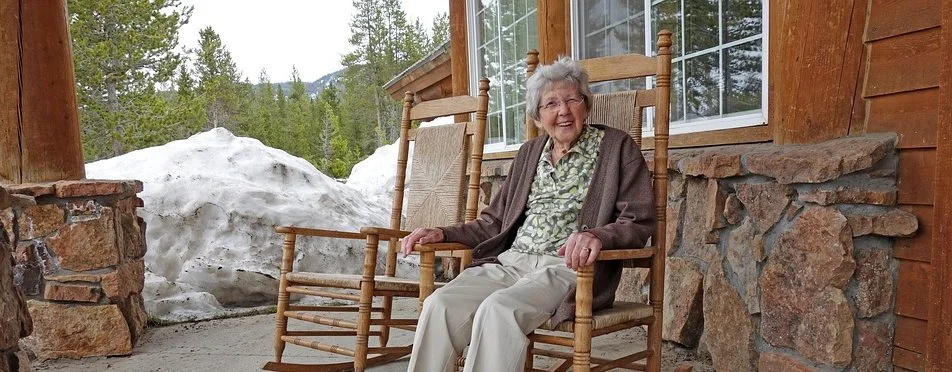
In a holler so deep the morning sun arrives an hour late, Ruth Calloway lives in a two-room cabin her grandfather built with logs he cut himself. She is seventy-four years old, five feet tall in her good shoes, and she has raised seven grandchildren there all alone.
Twelve years ago, her daughter Maggie died in a car wreck on the mountain road. Maggie’s husband, Dale, went off to Ohio for work a month later and never came back. The children came home to Ruth in ones and twos, carrying trash bags of clothes and faces too old for their years. The youngest, Tommy, was three. The oldest, Ellie, was fourteen and already trying to be a mother to the rest.
Ruth did not hesitate. She put a mattress on the floor, hung a curtain across the middle of the room, and told them all the same thing she had told their mother a lifetime before: “As long as I am breathing, this house has room.”
Seven Mouths to Feed
Ruth’s days began before dawn. Biscuits in the oven, beans soaking in a pot, the garden weeded before the school bus rattled up the dirt road. The children ate in shifts at the small table, and nobody ever left hungry, though Ruth herself often ate standing at the stove, picking at what was left in the pan.
Money was always short. Ruth sold quilts at the flea market, took in mending from the neighbours, and sold brown eggs by the dozen from a cardboard sign at the end of the road. Ellie waitressed at the diner in town after school. The boys worked at the sawmill in the summers. Every dollar went into the same chipped coffee can on the kitchen shelf, and every dollar came back out again for shoes, schoolbooks and medicine.
The cabin had no luxuries, but it had something better. On winter nights the seven children crowded around the wood stove while Ruth read to them from the same worn Bible she had read to their mother. On summer nights they caught fireflies in mason jars on the porch and listened to her stories about the mountain — about the spring that never ran dry, about the bear that once knocked on the door, about how their great-grandfather had walked up this same hollow with nothing but an axe and a mule.
The Letter From the County
Then, one cold morning in March, a letter came from the county. The property taxes were three years behind. Fourteen hundred dollars, or the land would go up for sale.
Ruth read the letter twice, folded it carefully, and put it in her apron pocket. She did not tell the children. That night, after they were asleep, she sat at the table with her hands wrapped around a cold cup of coffee and did the arithmetic over and over. Even if she sold every quilt she had and every egg the hens could lay, it would not be enough.
For the next two months she worked harder than she had in years. She took in extra mending. She sold her mother’s china, piece by piece, at the flea market. She walked the three miles to town and back instead of paying for the bus. But the number on the letter never seemed to get smaller.
The children noticed. They were not little anymore — the oldest were grown, working jobs of their own, and they watched their grandmother grow thinner and quieter. Ellie asked her more than once what was wrong. Each time Ruth smiled and said the same thing: “Nothing, baby. Grandma’s just tired.”
The Envelope in the Bible
On a Sunday morning, the youngest, Tommy, now fifteen, found her sitting at the table with her head in her hands. He did not ask what was wrong. He just went to the shelf, took down the family Bible, and set it in front of her.
“Open it, Grandma,” he said.
Ruth opened the Bible — and there, tucked between the pages, was an envelope she had never put there. Inside it were receipts. Property tax receipts, paid in full, every year, for six years. In different handwriting. Ellie’s careful print. The twins’ messy scrawl. The boys’ block letters.
Ellie stood in the doorway, and one by one the others gathered behind her.
“We’ve been paying it, Grandma,” Ellie said softly. “Ever since I turned sixteen. A little from every paycheque. From the diner, from the sawmill, from the garage. We never told you because we knew you’d say no.”
Ruth stared at the receipts. Her hands shook. “But the letter said —”
“The letter was old,” said the oldest boy, Jacob. “We paid it the week it came. We just never told you. You spent twelve years keeping us alive, Grandma. Did you really think we’d let them take the mountain?”
Ruth laughed then — a real laugh, the kind the children had not heard in months — and then she cried, and then all seven of them were around her, arms everywhere, the way they had been when they were small.
That night the cabin was full of noise again. Someone put on music. Someone burned the biscuits. Tommy caught fireflies on the porch, and Ruth watched from her rocking chair, the envelope still in her lap.
She had spent twelve years keeping seven children alive on a mountain nobody wanted. It turned out they had been keeping her — and the mountain — alive too.