 By ali4050284
What Is the BMI Calculator NHS?
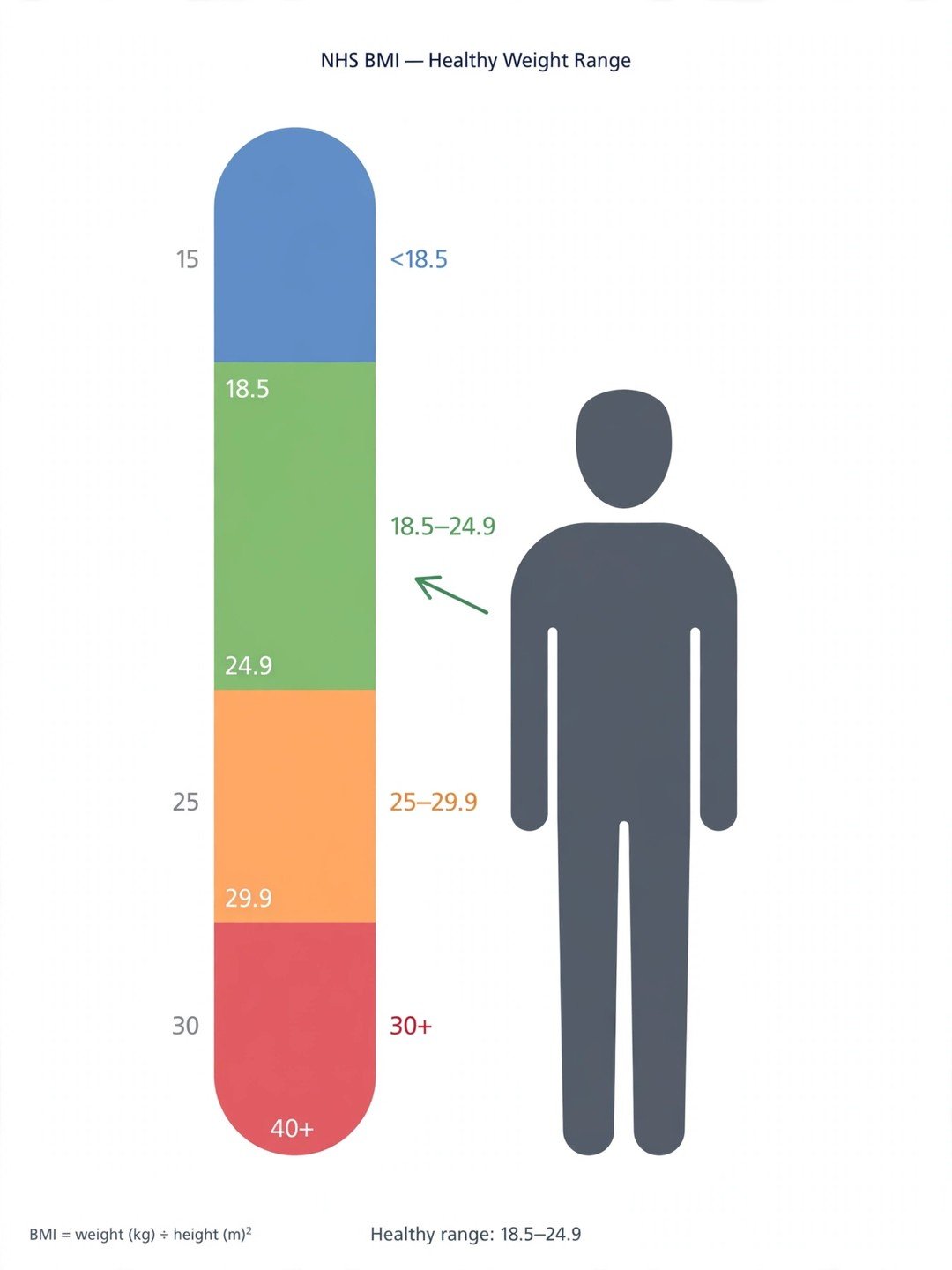
The BMI calculator NHS is the body mass index tool recommended by the UK’s National Health Service to check whether your weight is healthy for your height. The NHS uses BMI as a first-step screening measure: a single number that places you in one of four bands — underweight, healthy weight, overweight, or obese.
BMI is calculated the same way everywhere in the world:
BMI = weight (kg) ÷ height (m)²
For example, a person who weighs 70 kg and is 1.75 m tall has a BMI of 70 ÷ (1.75 × 1.75) = 22.9 — comfortably in the NHS healthy range.
🧮 BMI Calculator NHS
Enter your height and weight to check your BMI the NHS way.
NHS BMI Ranges: What Your Score Means
The NHS publishes the following adult BMI bands:
| BMI Score | NHS Classification |
|---|---|
| Below 18.5 | Underweight |
| 18.5 – 24.9 | Healthy weight |
| 25 – 29.9 | Overweight |
| 30 and above | Obese |
These bands come from NHS guidance on healthy weight and are endorsed by NICE (National Institute for Health and Care Excellence).
How to Use the BMI Calculator NHS Method at Home
You don’t need the official tool to apply the NHS method. Follow these steps:
- Weigh yourself in kilograms, ideally in the morning before eating.
- Measure your height in metres (e.g. 1.75 m, not 175 cm).
- Square your height — multiply it by itself.
- Divide your weight by that number. The result is your BMI.
- Match it to the NHS bands in the table above.
BMI Calculator NHS for Children and Teenagers
For children aged 2–18, the NHS does not use the adult bands. Instead, a child’s BMI is plotted on a percentile chart for their age and sex. A child above the 91st percentile is classed as overweight, and above the 98th percentile as obese, under NHS guidance. If you’re checking a child, use an age-and-sex percentile calculator rather than the adult formula.
Limitations: What the BMI Calculator NHS Doesn’t Tell You
The NHS itself notes that BMI is a screening tool, not a diagnosis. It doesn’t distinguish muscle from fat — so athletes and very muscular people can score as “overweight” while being perfectly healthy. It also doesn’t account for where fat is carried; the NHS recommends also measuring your waist (under 94 cm for men, under 80 cm for women) for a fuller picture. If your BMI is outside the healthy range, the NHS advises speaking to your GP before making major changes.
What to Do After Your NHS BMI Result
- Healthy (18.5–24.9): keep up balanced eating and 150 minutes of moderate activity per week, per NHS guidance.
- Overweight (25–29.9): aim for the NHS safe rate of 0.5–1 kg loss per week through a 500–1,000 kcal daily deficit.
- Obese (30+): talk to your GP — the NHS offers structured weight-management programmes and referrals.
- Underweight (below 18.5): speak to your GP or a dietitian about healthy weight gain.
FAQs
Is the BMI calculator NHS accurate?
Yes, for population-level screening. The NHS uses BMI as a first check because it’s simple and well-validated, but it recommends waist measurement and GP advice for individual assessment.
What is a good BMI for the NHS?
The NHS defines a healthy BMI as 18.5 to 24.9 for most adults.
Does the NHS BMI calculator work for athletes?
Not reliably — muscle weighs more than fat, so muscular people can get misleadingly high scores. The NHS suggests waist measurement as an additional check.
Where is the official BMI calculator NHS tool?
The official tool is on the NHS website (nhs.uk) under “BMI calculator”. This guide explains the same official method step by step.
Disclaimer: This guide explains the publicly documented NHS BMI method for information only and is not affiliated with NHS England. Consult your GP for personal health advice.